Salmonsbury: a celebration of landscape and history, art and archaeology
A celebration of landscape & history and an exhibition of art created in response to the landscape & archaeology of GWT Greystones Farm Nature Reserve in Bourton-on-the-Water; curated with artefacts from the Corinium Museum archaeological archive.
For the past year, I have been part of a project combining art and archaeology, a collaboration between six artists, Gloucestershire Wildlife Trust, the Corinium Museum and Walking the Land. An exhibition at the Corinium Museum, Cirencester, 10 September – 11 October, Salmonsbury: a celebration of landscape and history, brings together this archaeological and artistic engagement and response to the historic landscape. On display are artworks created in response to the site, alongside artefacts from the archive.
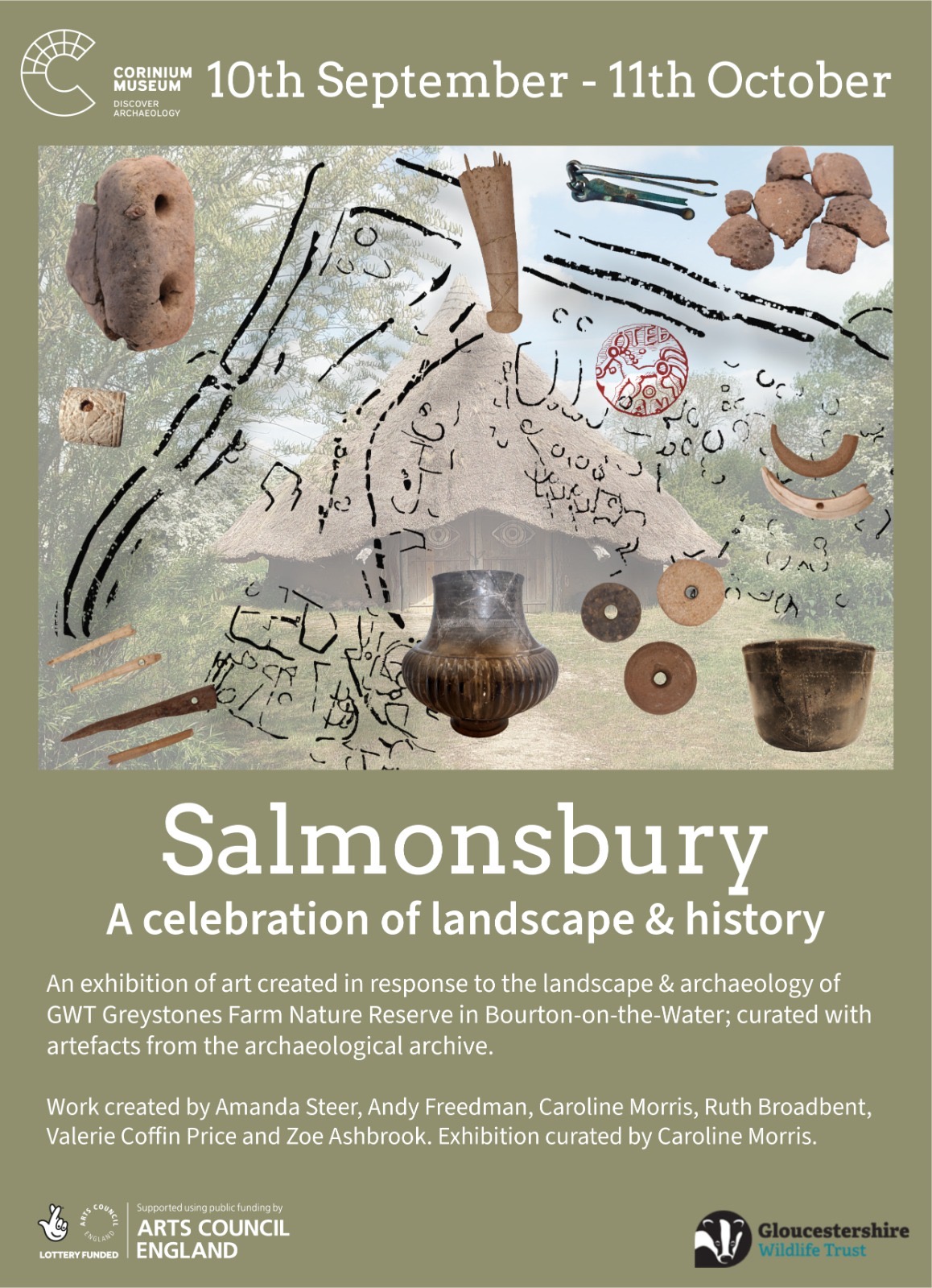
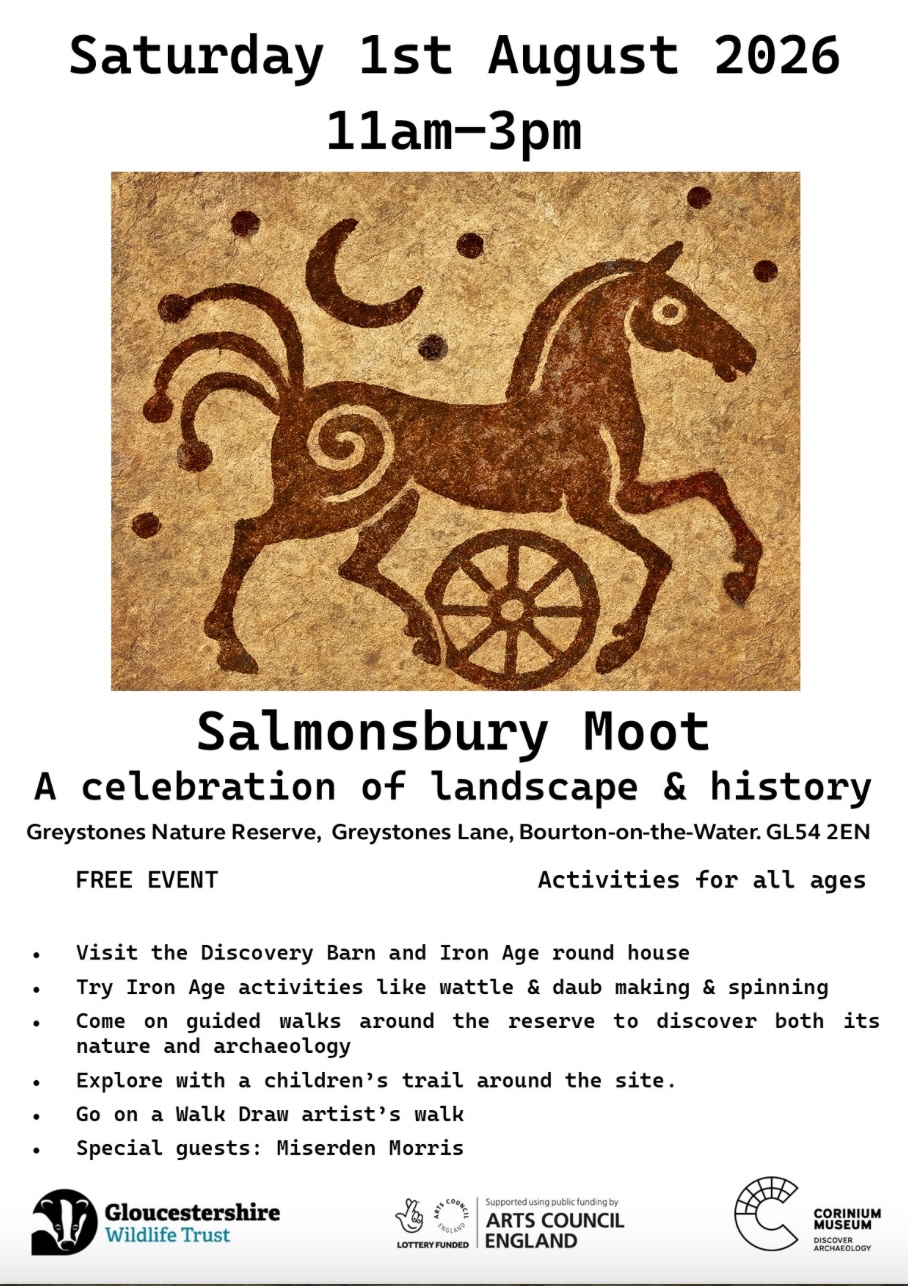
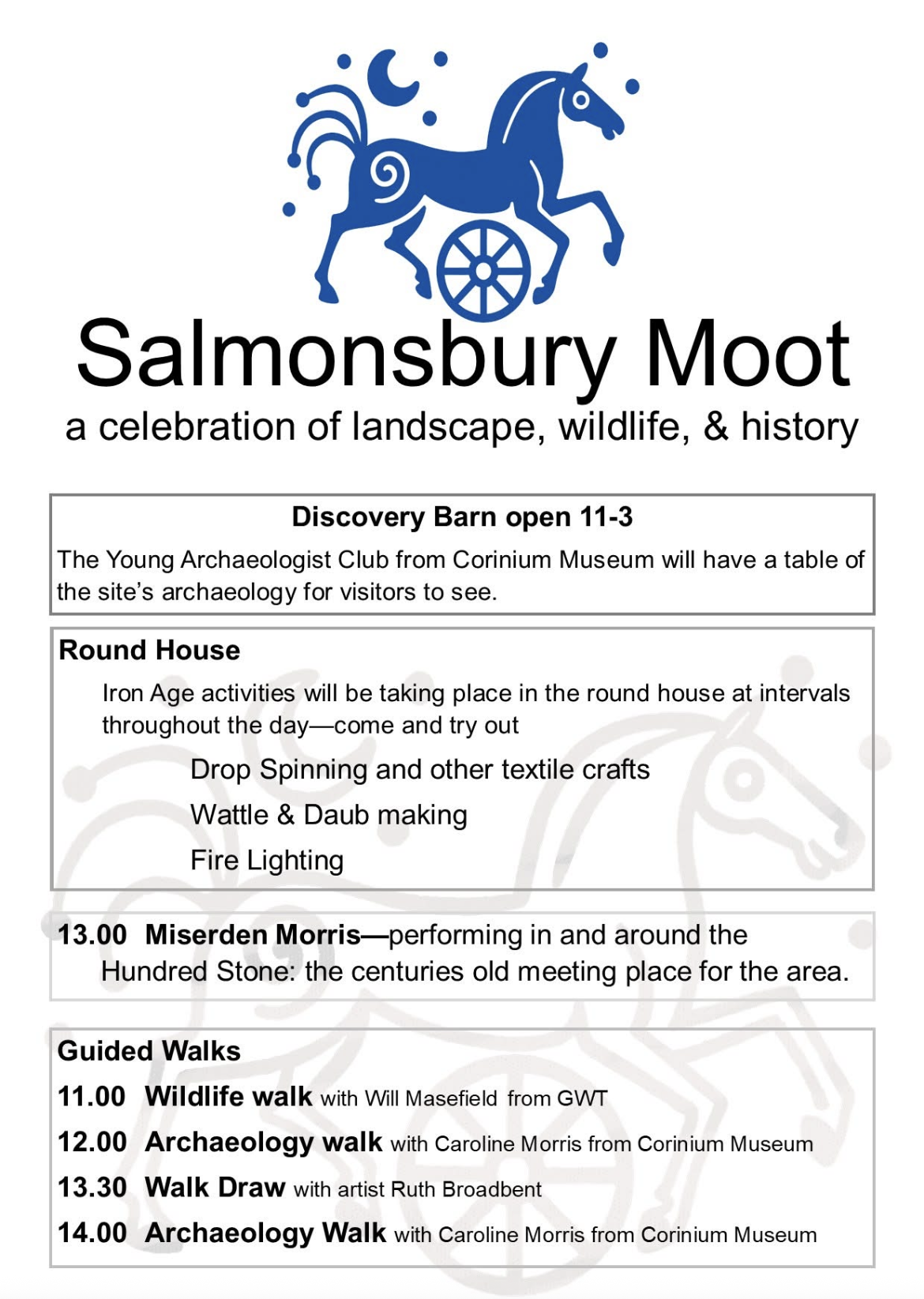
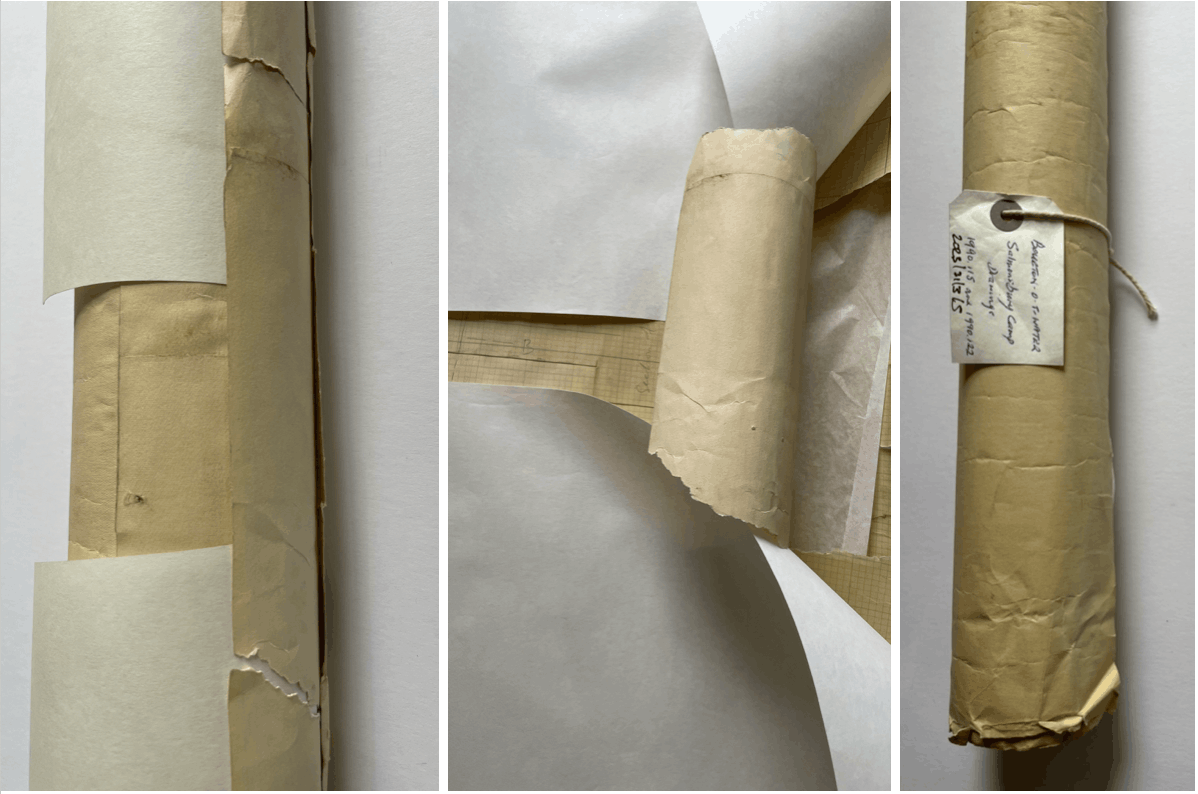
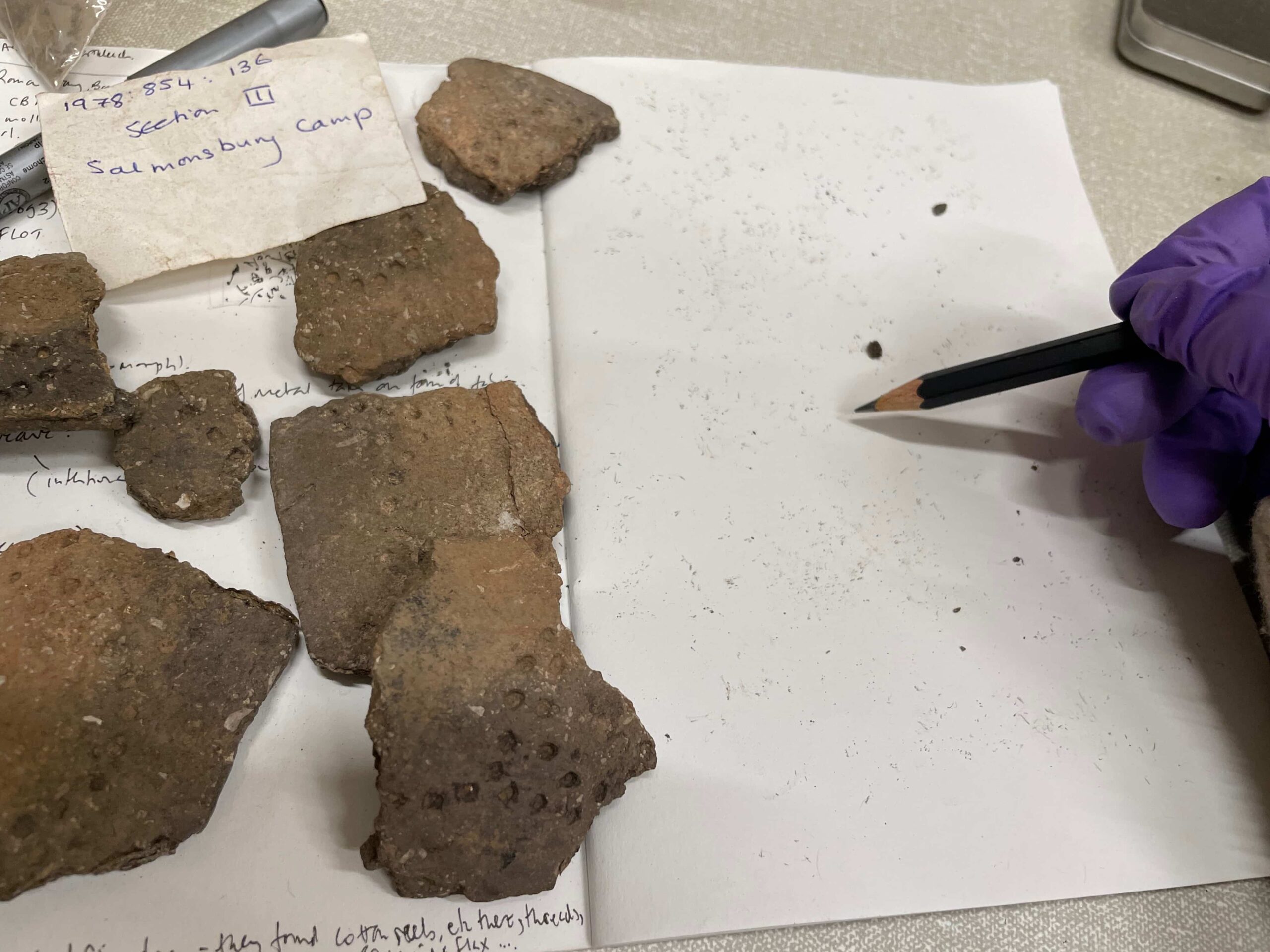
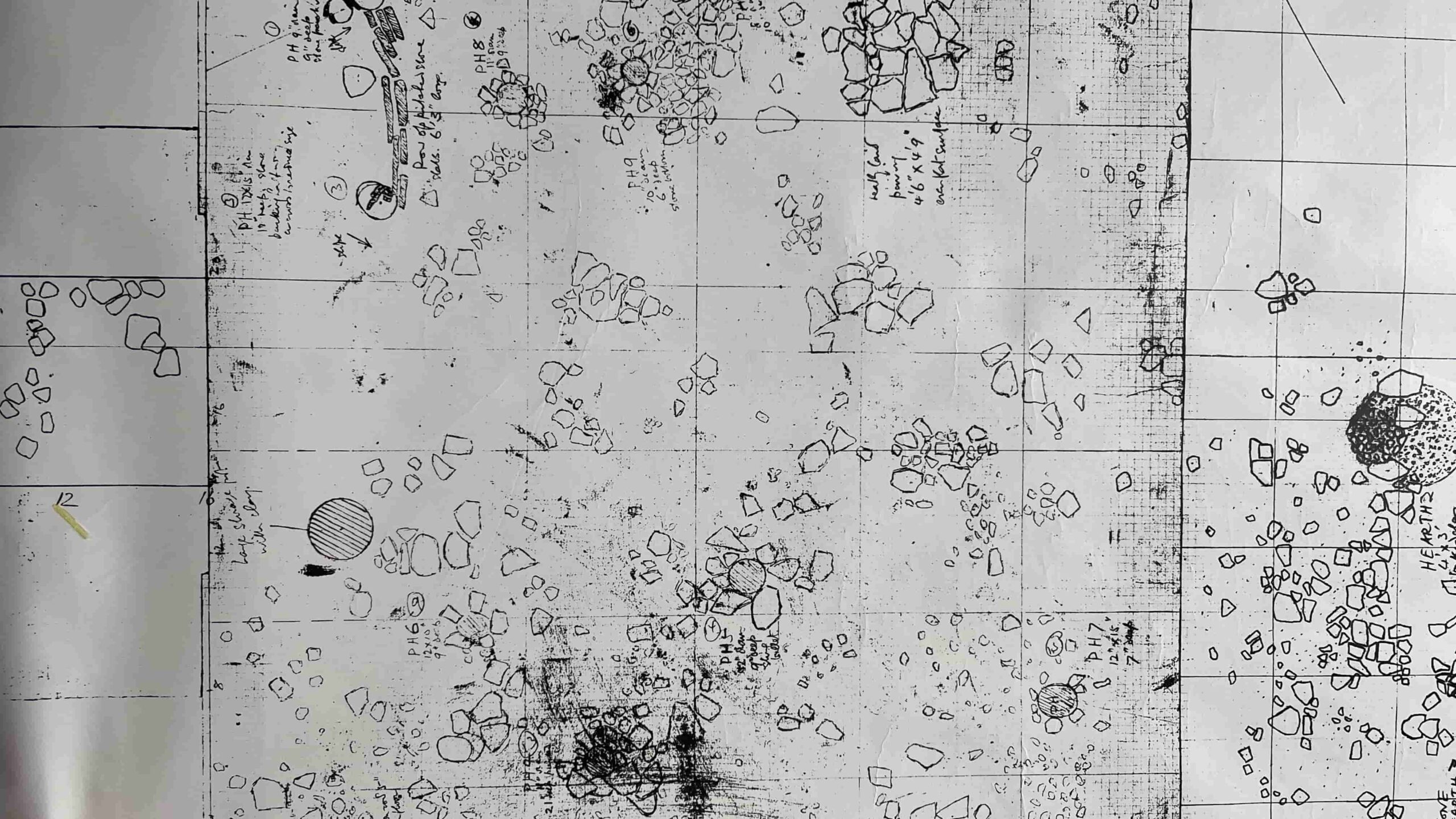
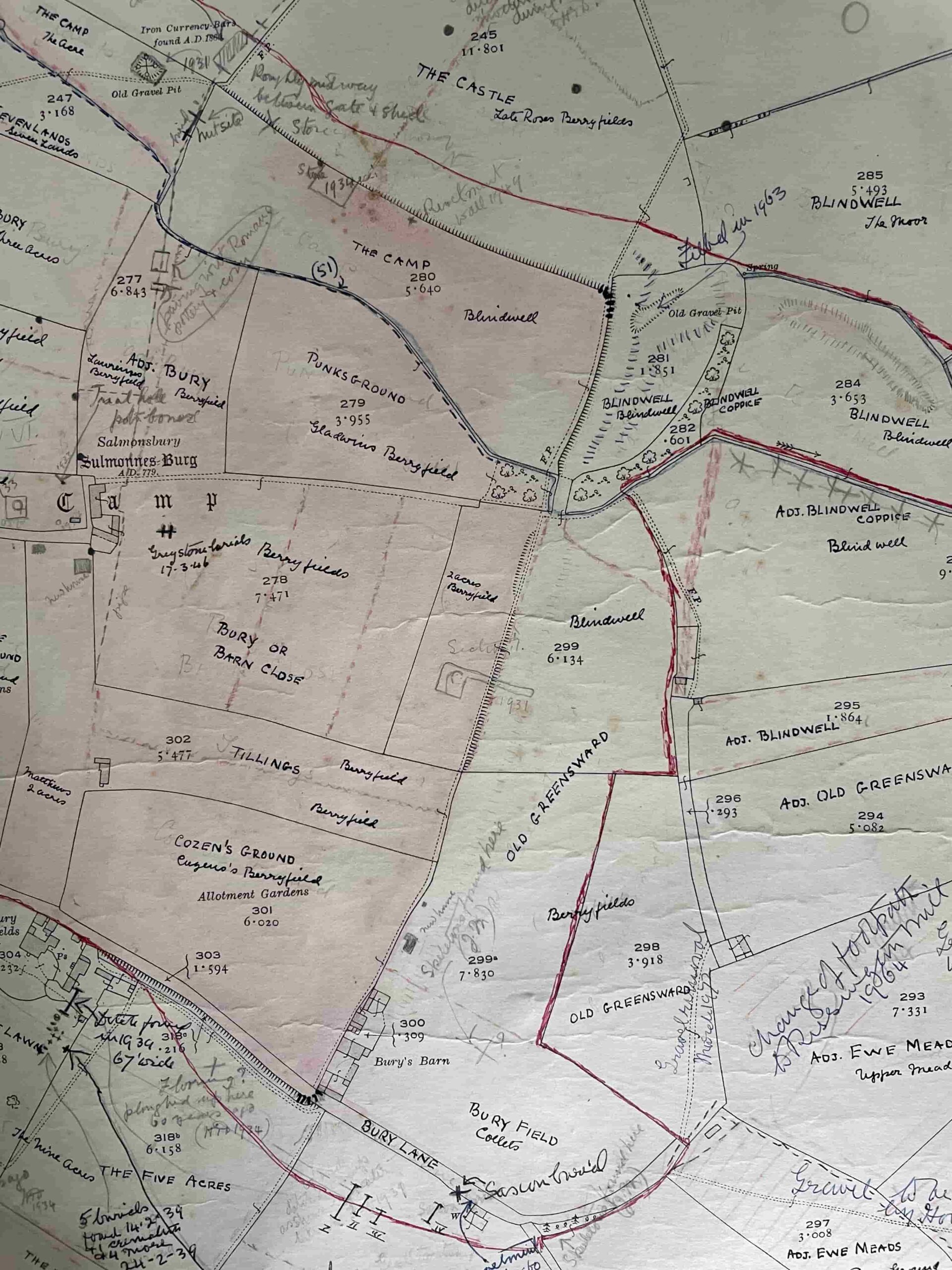
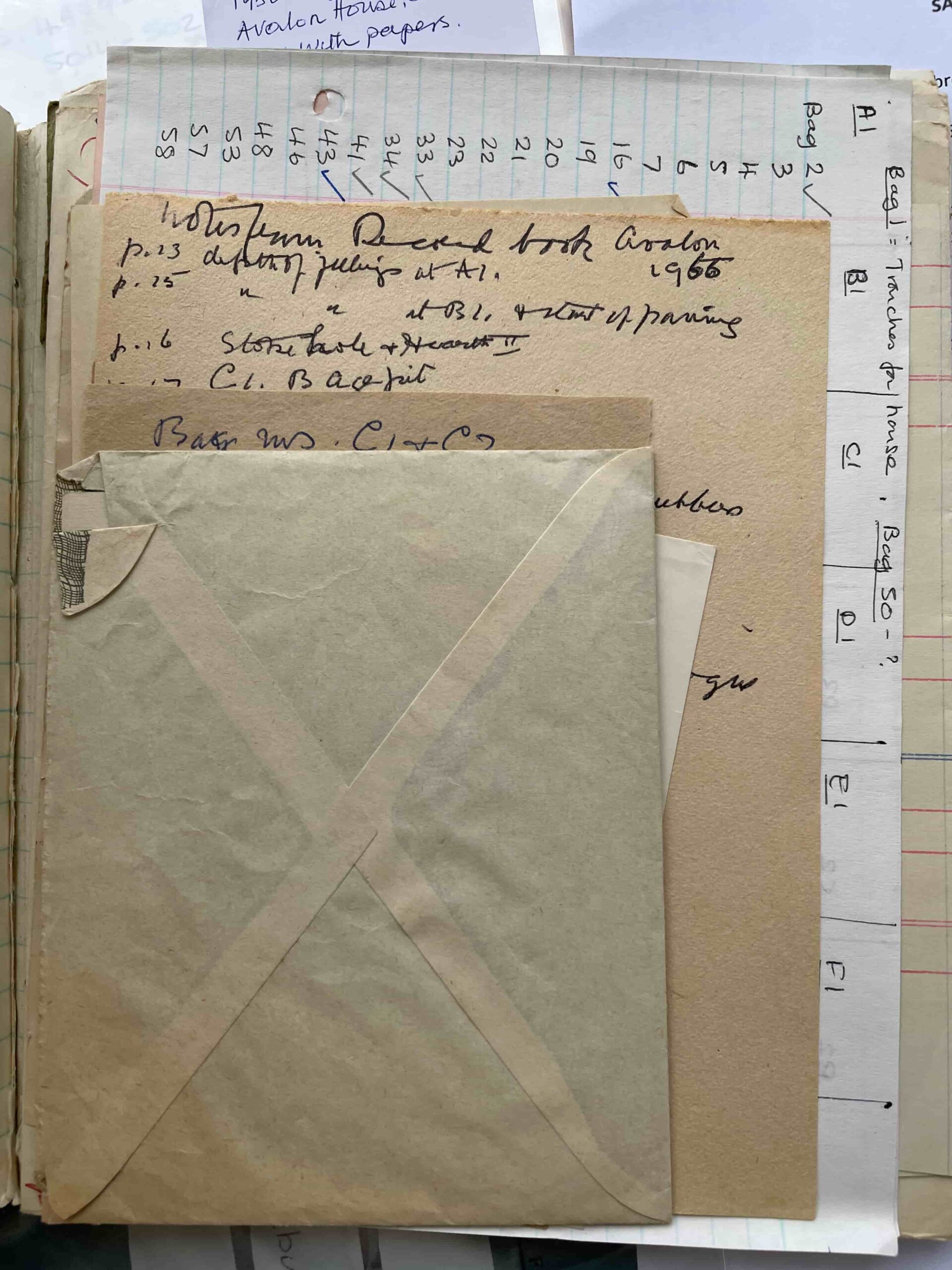
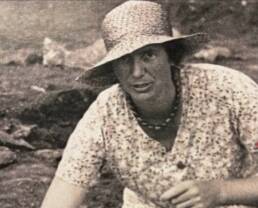
In August, a Moot engagement day was held at Salmonsbury Camp, a scheduled site in Bourton-on-the-Water. There is evidence for activity from the Neolithic and Bronze Age at Salmonsbury. The camp itself is Iron Age in date with activity continuing into the Roman occupation. Excavations have found Anglo Saxon burials and Medieval Ridge and Furrow. The site was used as the meeting place for the court leet of the Salmonsbury hundred. It is now a farm and nature reserve. The paper archive at the Corinium Museum includes digs from the Thirties up to the 2000’s: also revealing some of the story of the Helen O’Neill, a redoubtable female archaeologist.
Two years ago, I was involved with a connected exhibition, Field Walking, linking art and archaeology at Abbey Home Farm with an exhibition at the Corinium Museum. I drew on this earlier project and exhibition in my initial approach to this project on a different site.
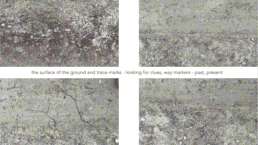
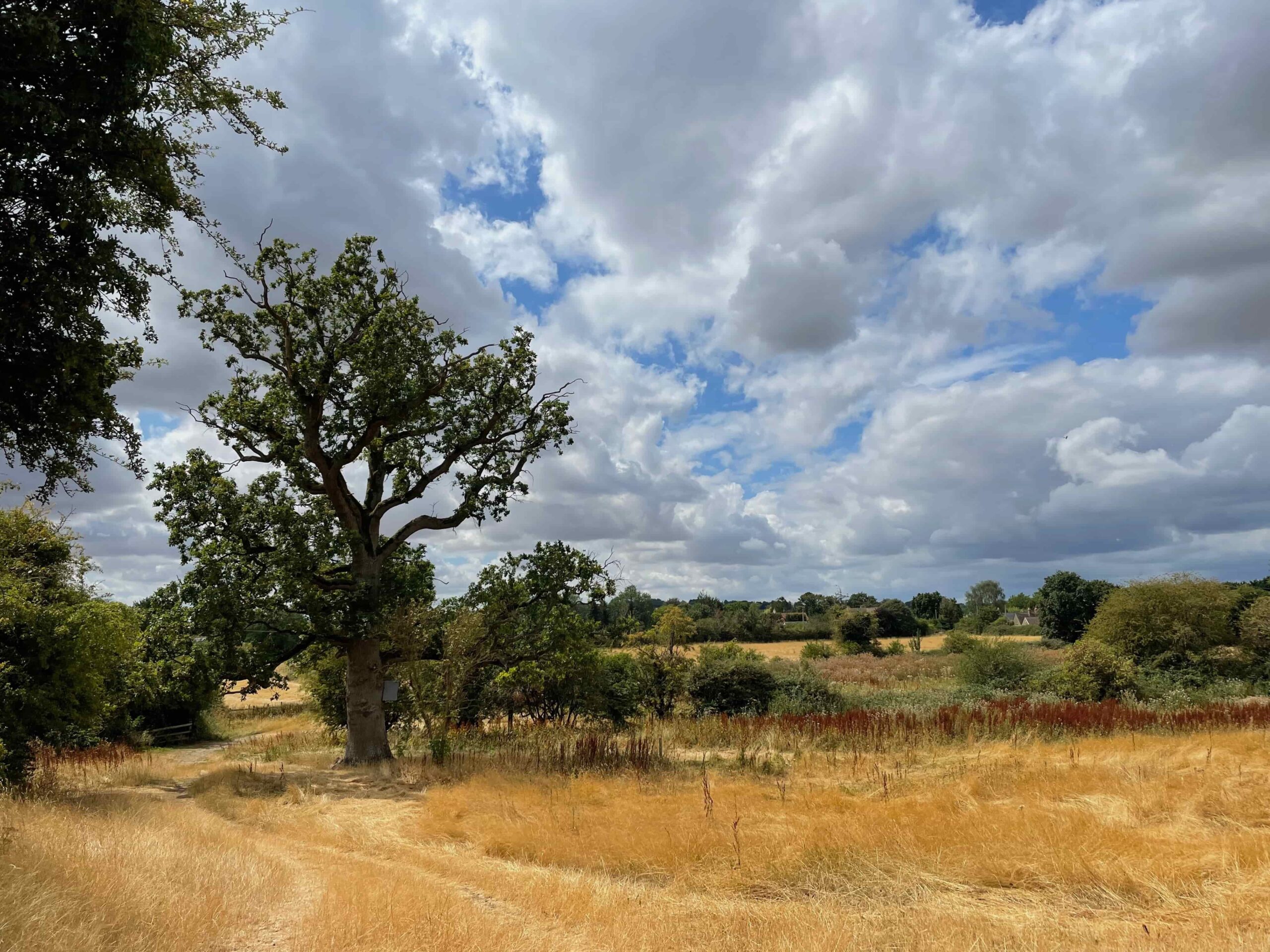
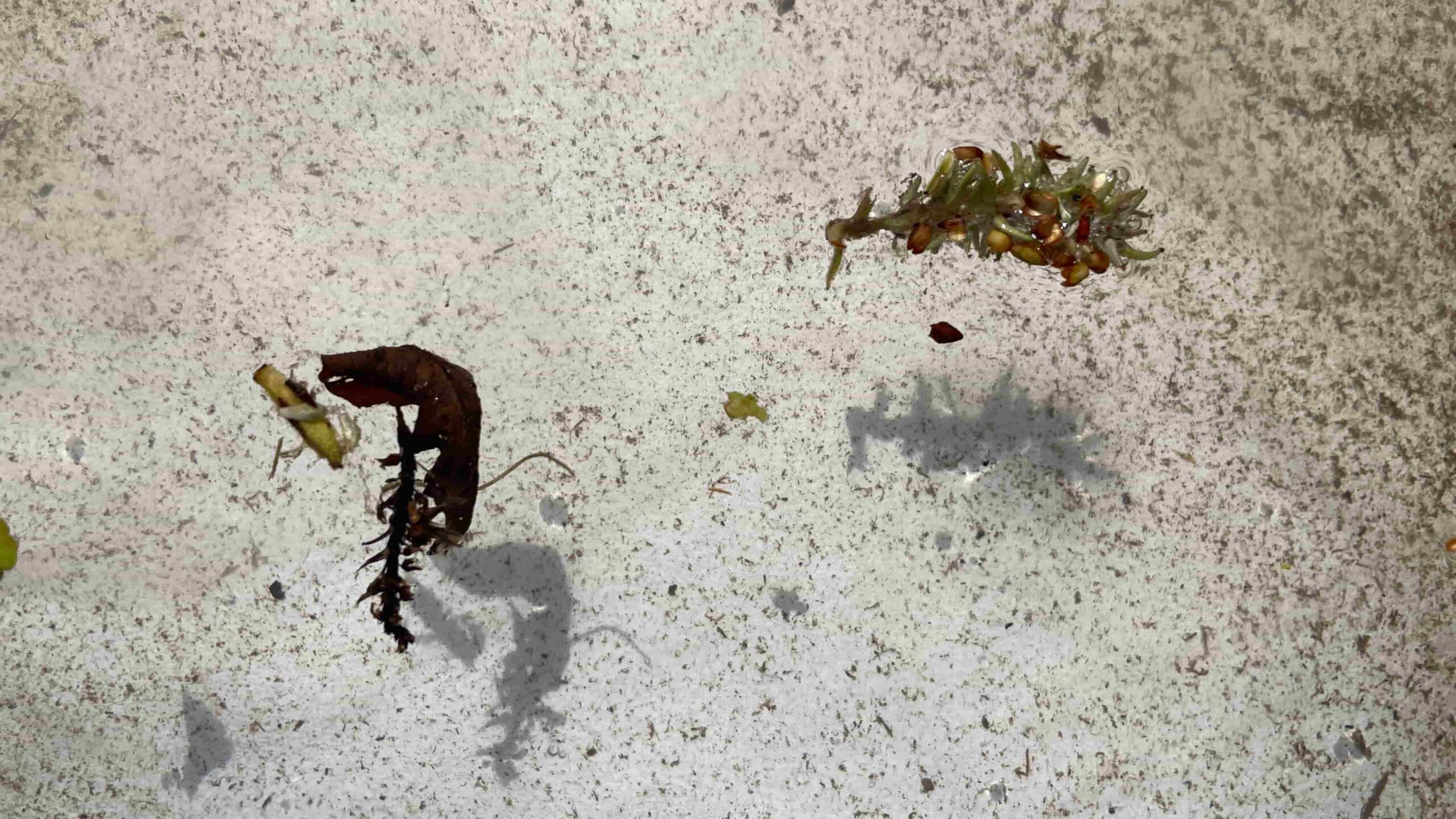
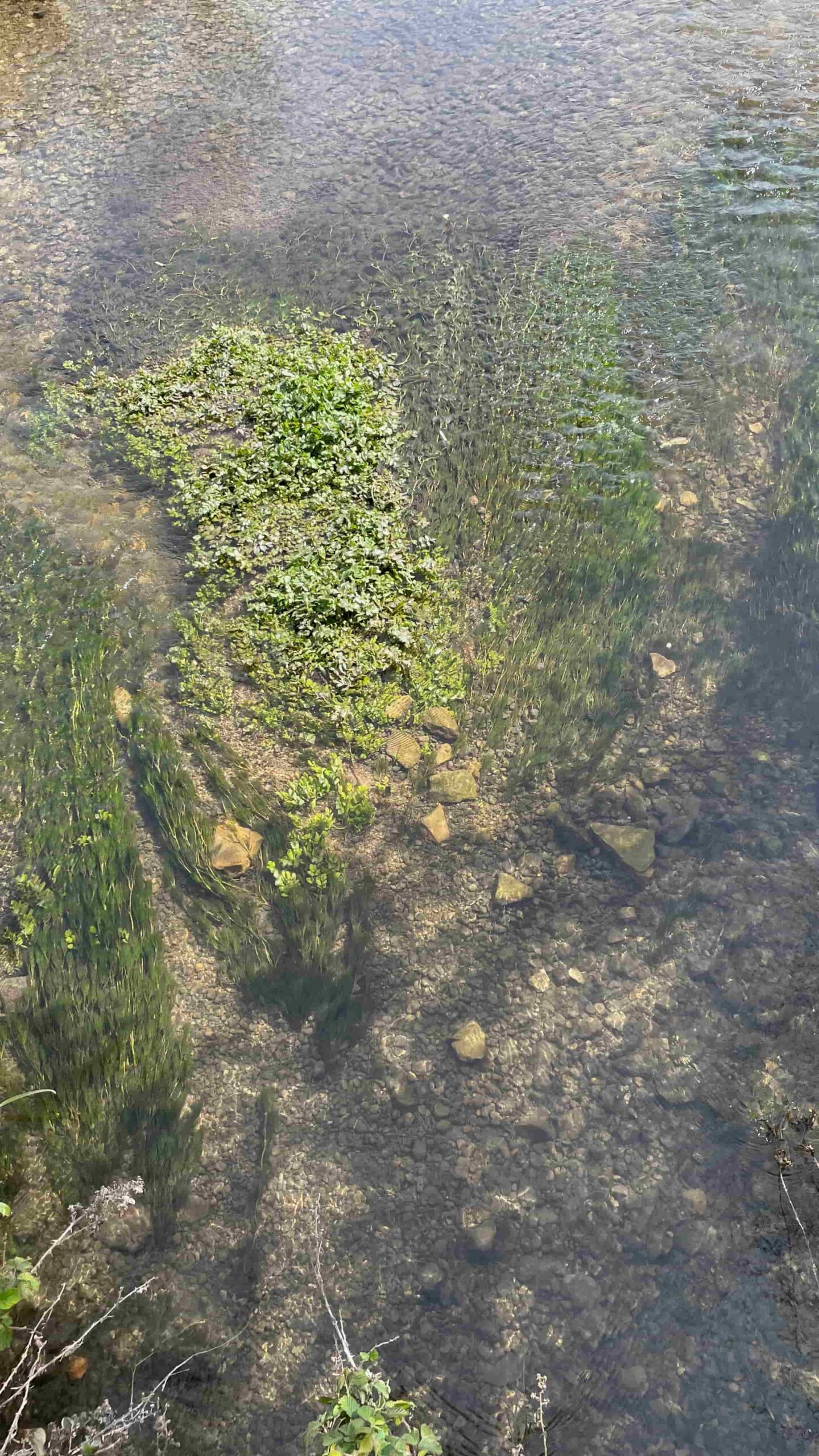
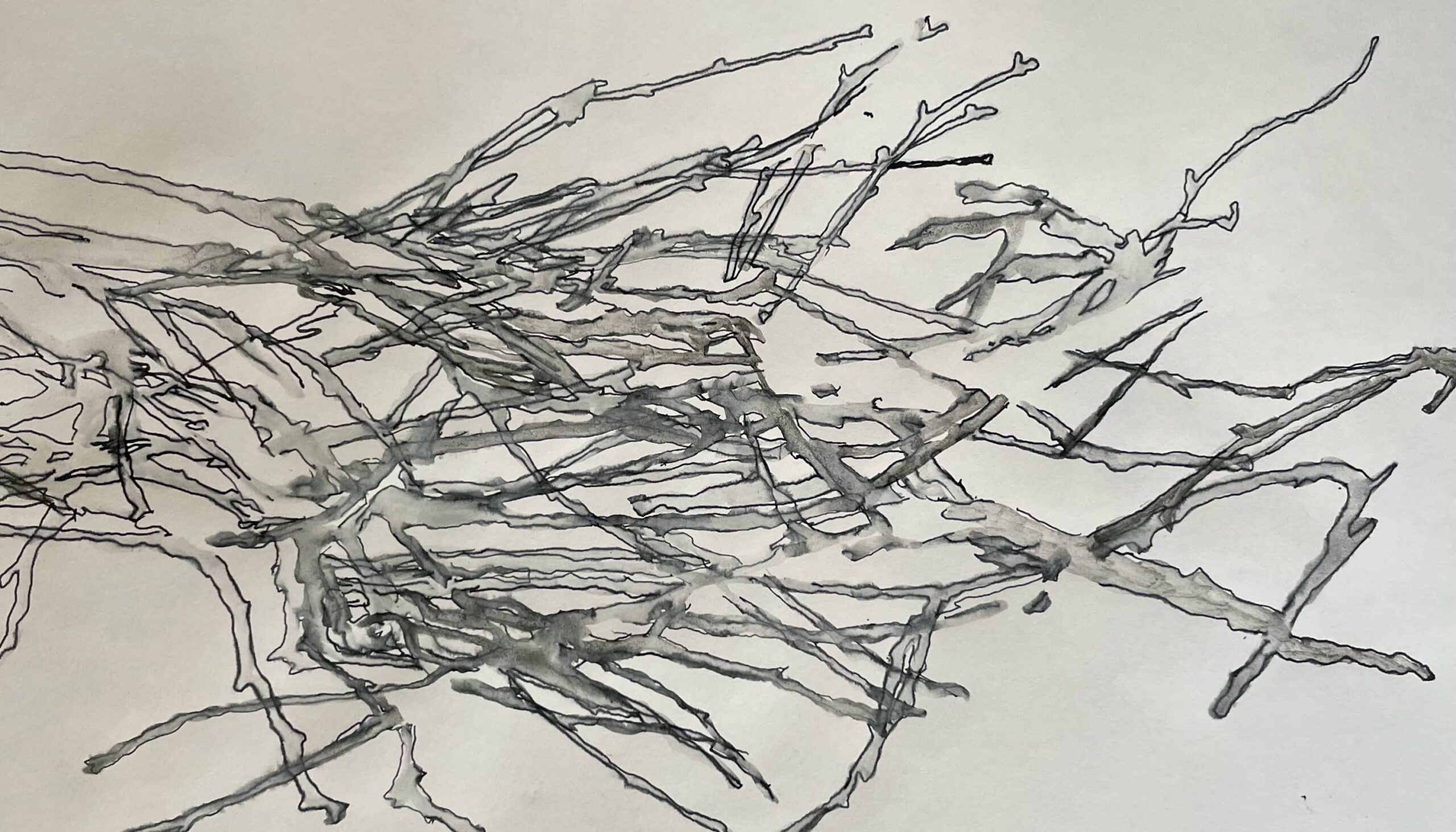
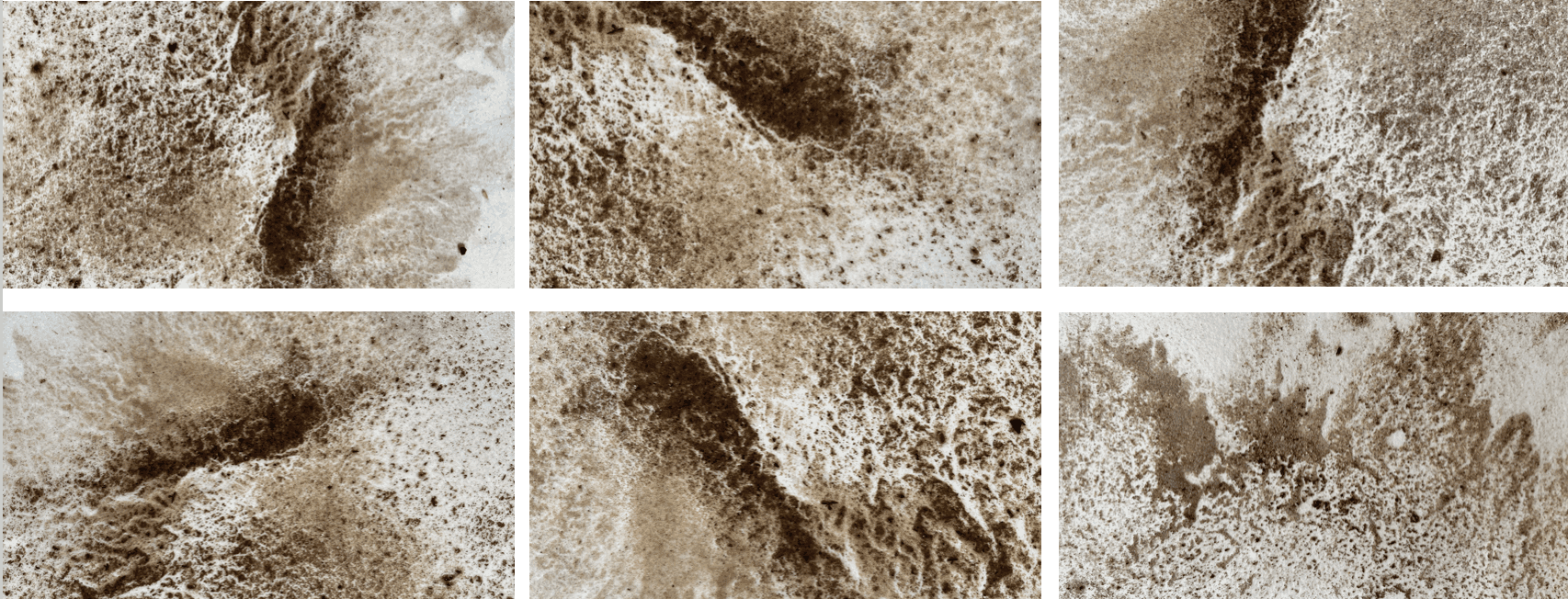
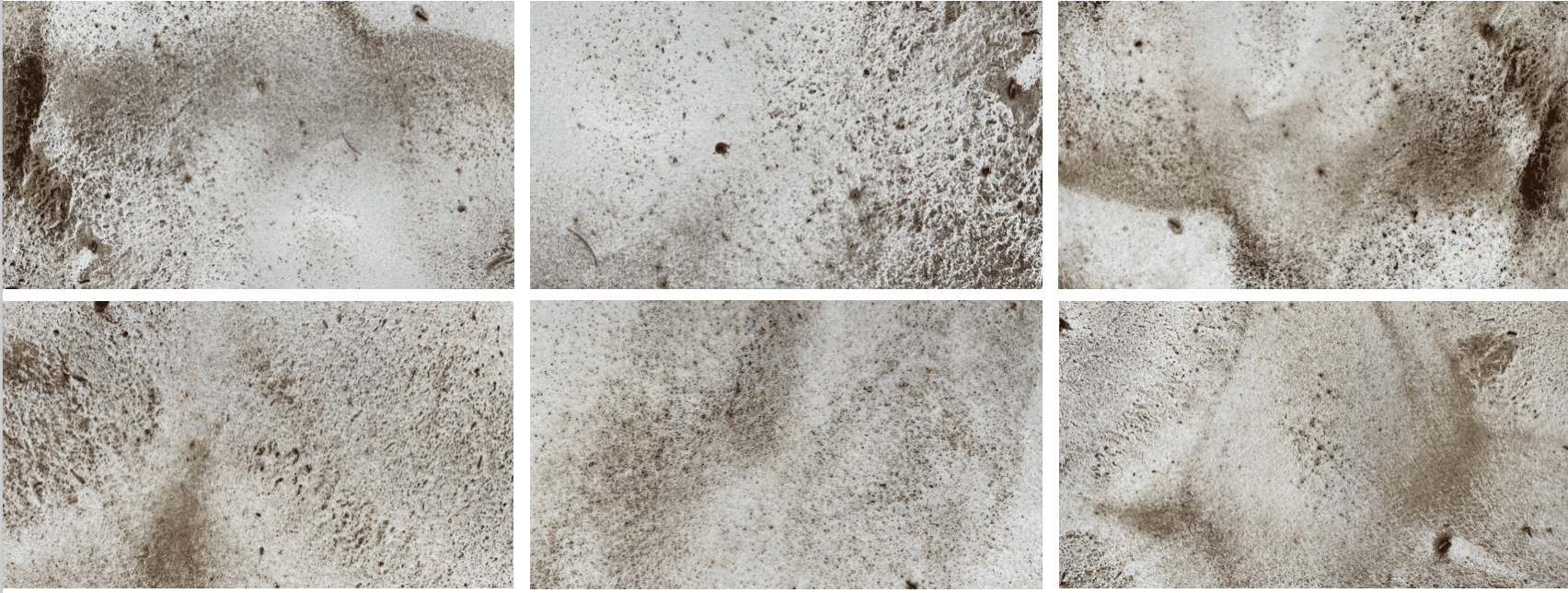
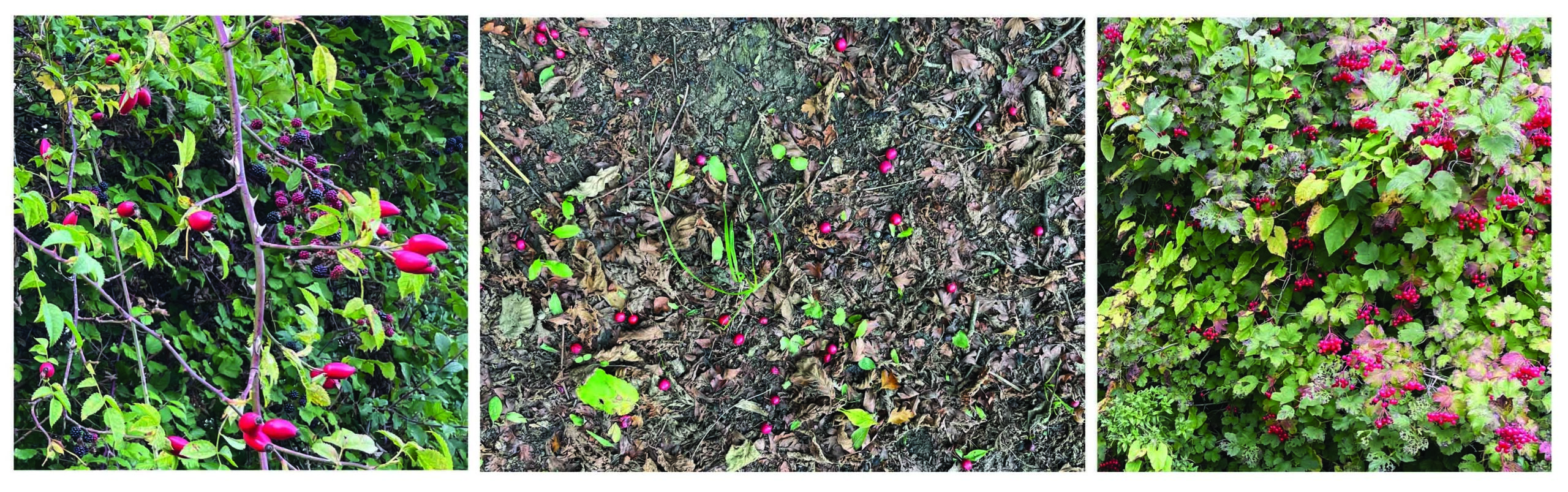
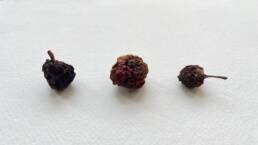
Walking Greystones through the seasons, I’ve made works on footpaths, in rivers, by hedgerows and trees. Research in the archives and sketching days in the museum have brought together found objects, natural and human-made. The mixed media works reflect these multiple sites. Linking past and present, I’ve focused on marks and traces, notes, mapping, language and storytelling. Collective memories and imagination add to the stories of this place and its paths, and leading a walk.draw at the moot generated new areas of discovery. Archaeological processes have inspired my making: discovering how flot is gathered led me to mix my marks with those in nature; watching river flow, silt and fish over paper; mapping dry twigs embedded in a track, light brown from soil and rain; collecting crab apples, now air dried into miniature forms.
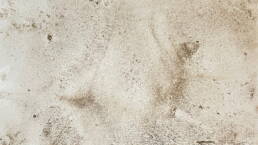
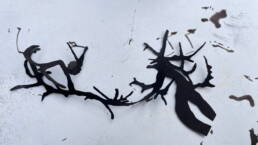
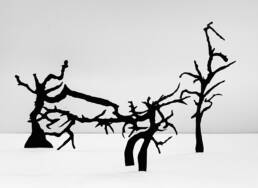
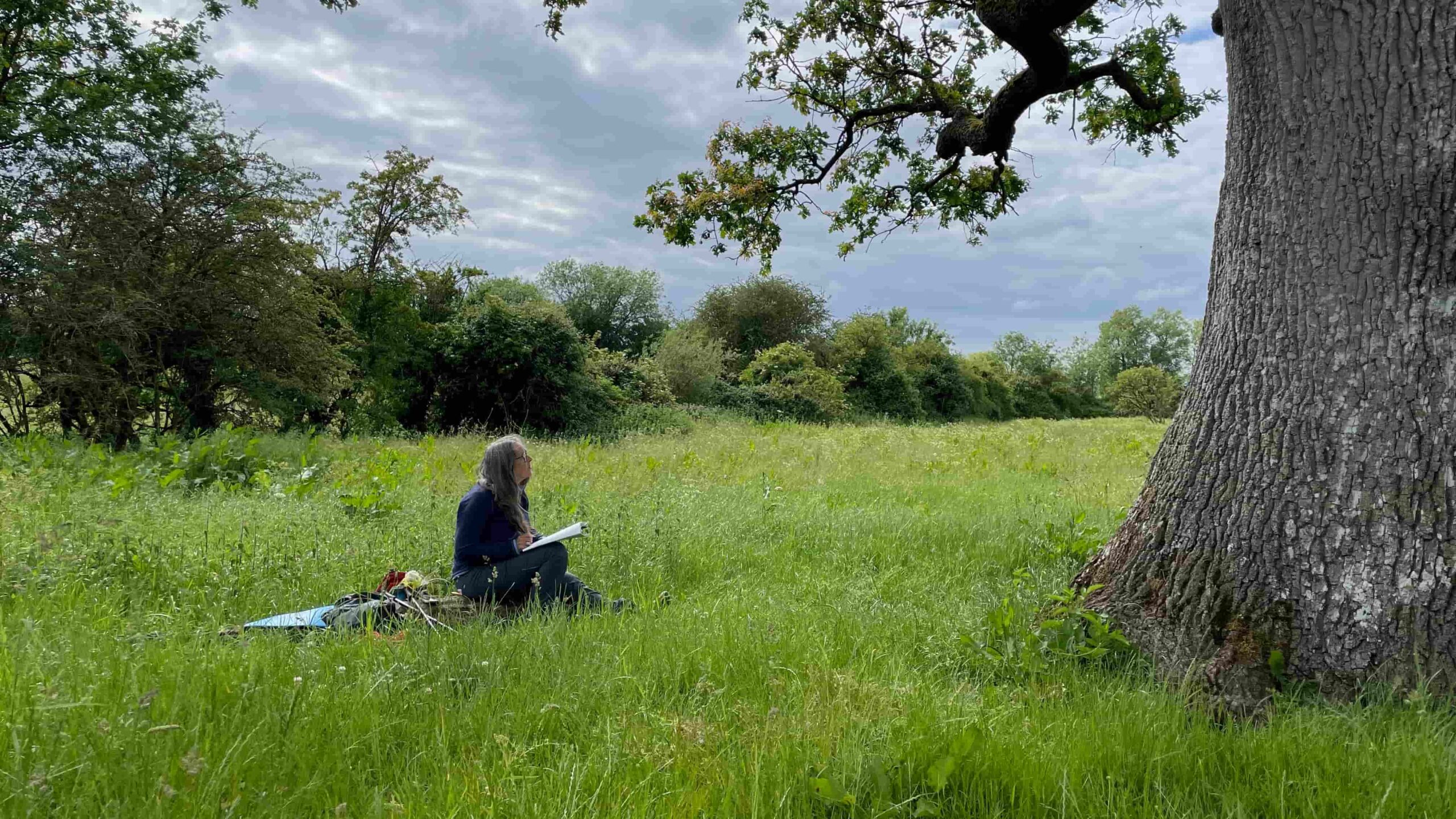
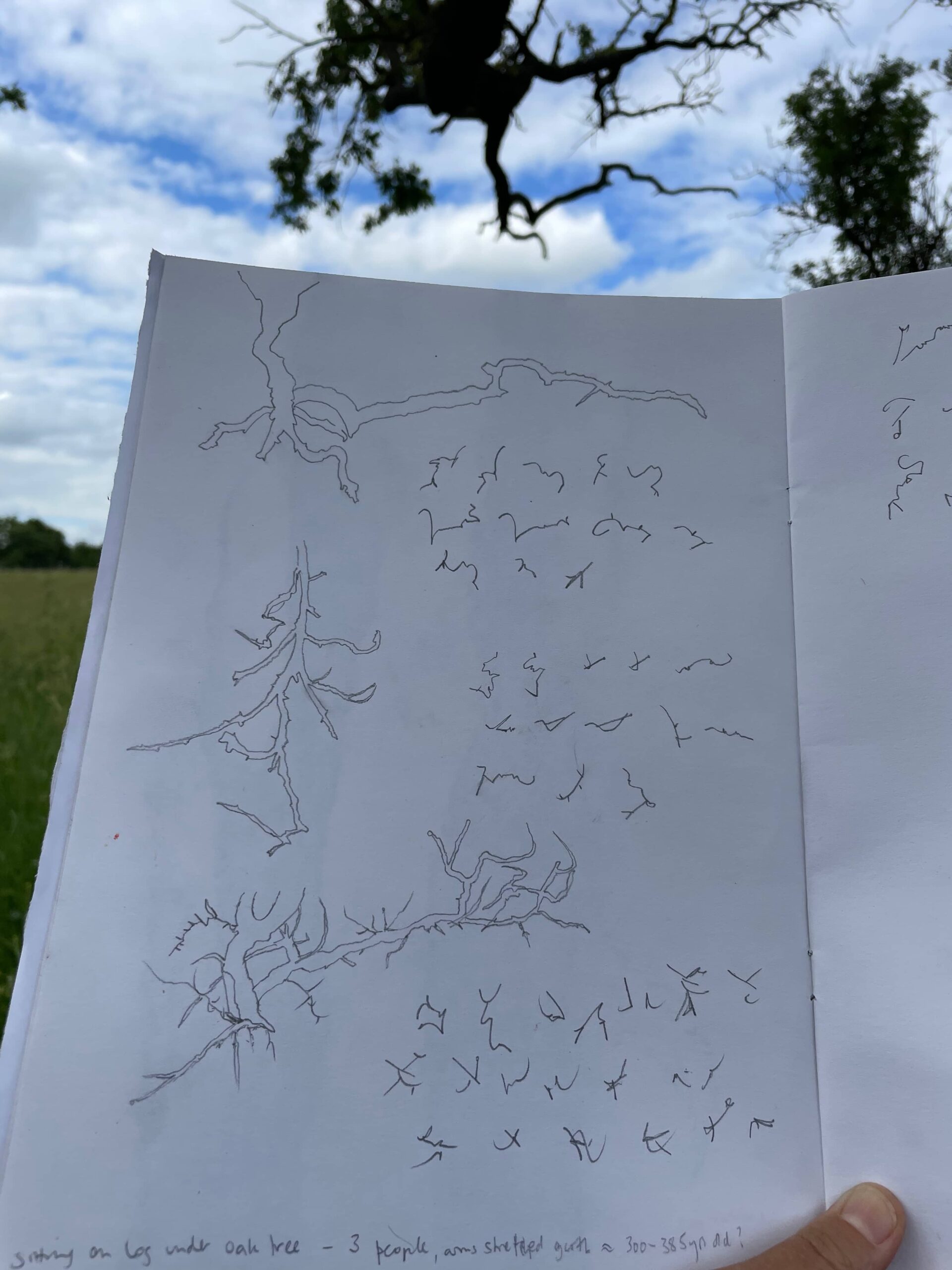
Sitting under the old oak tree in Seven Lands, I sketched its branches reaching out, recording a moment in time, wondering if they will fall during drought and storms, or grow and generate new trees. One of the branches feels joyful and dancing, reminding me of the Salmonsbury horse on a coin found on the site.
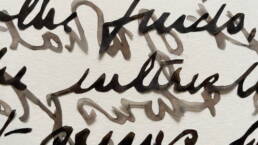
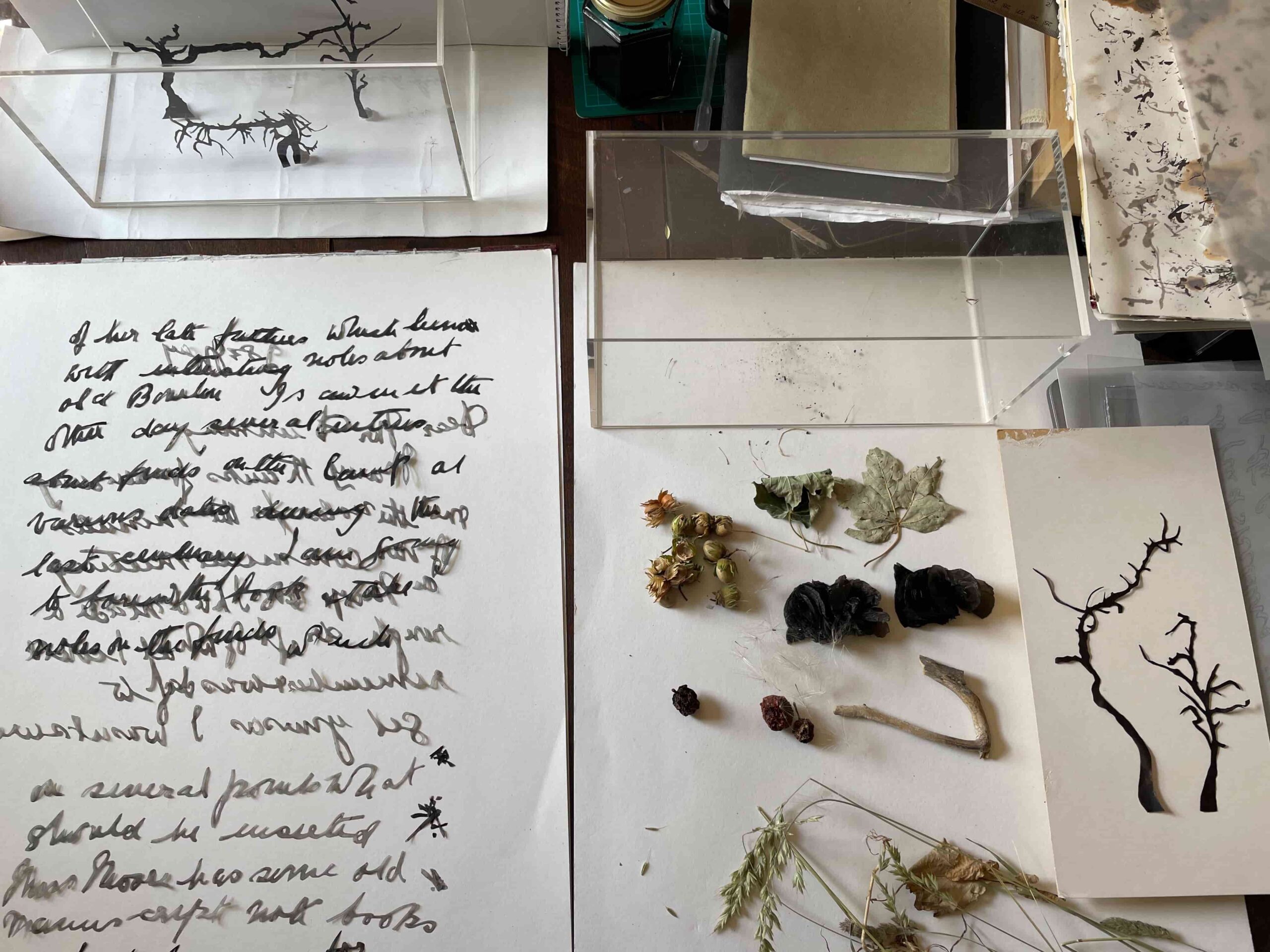
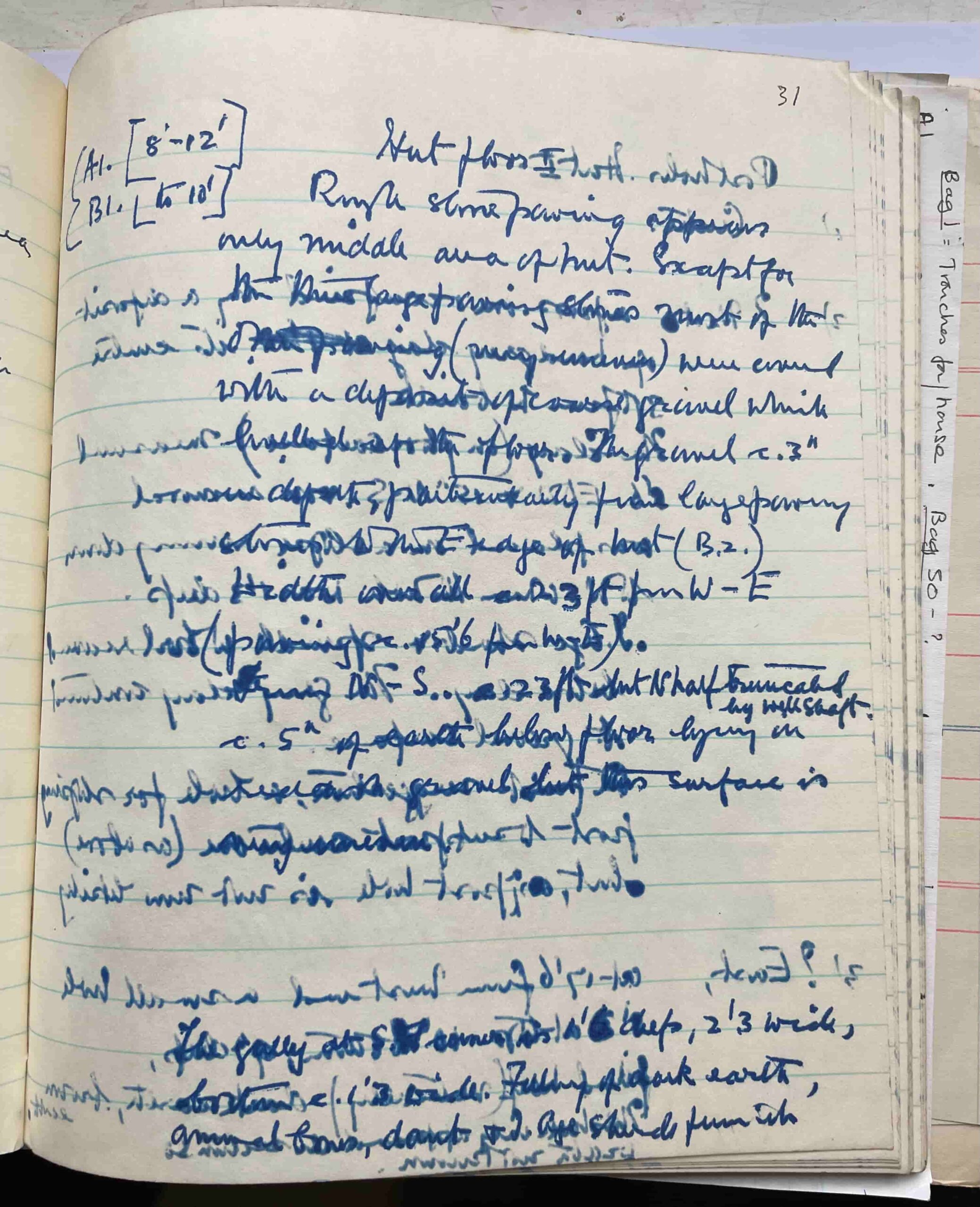
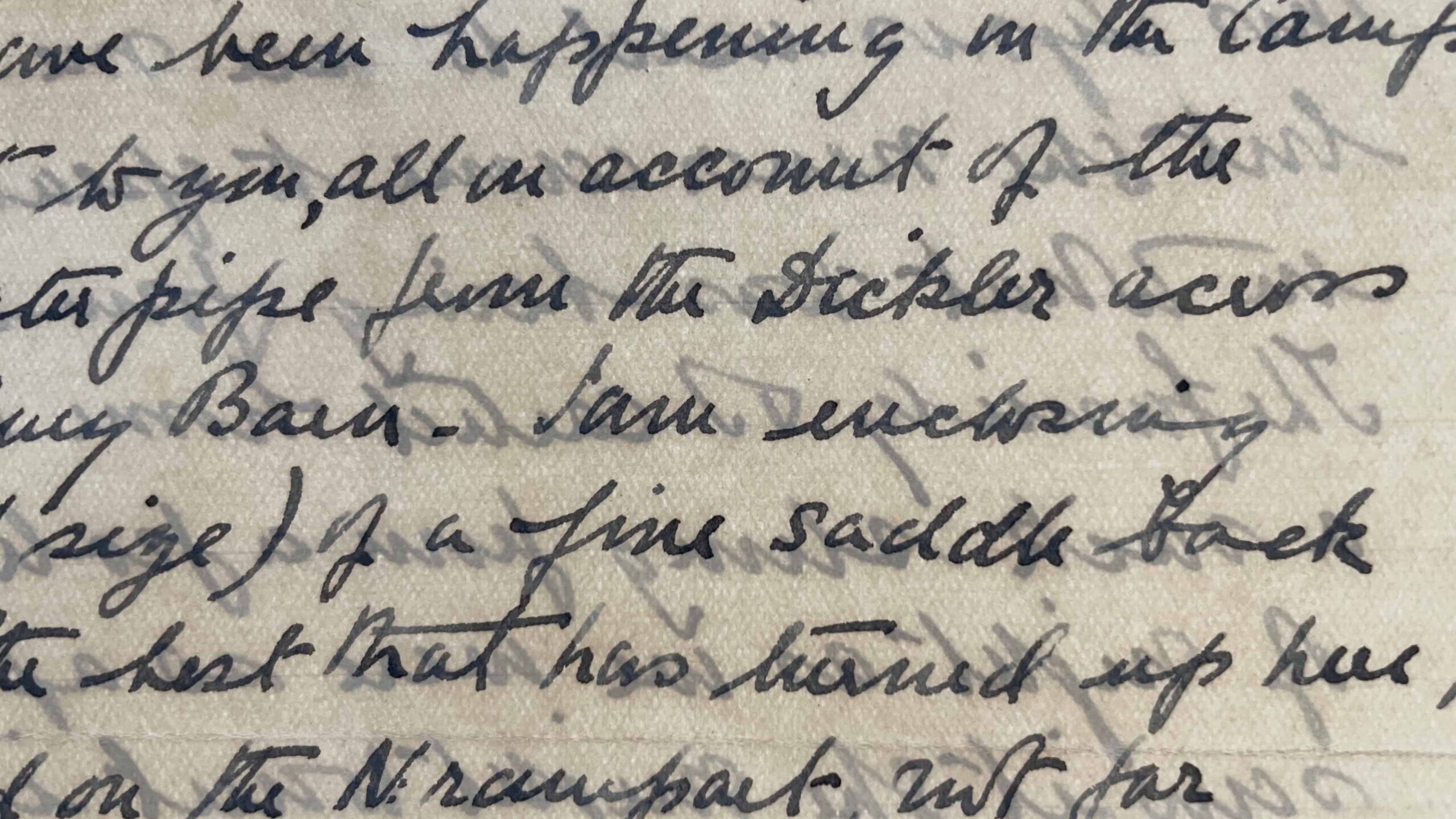
The transcribed letter is a process of reconstruction and layering, the first page revealed further back in time than the second. A phrase within it, “notes on the finds”, helped me connect my own observations and ‘finds’ with the history, archaeology and ecology of the site. I incorporated into the work the inevitable breaks and slippage lost during the making. As with erosion and change within landscapes, words shift and move but an essence remains. These are the beginnings of an idea for adding new layers and shifting towards asemic writing.
In August I led a walk.draw at the Salmonsbury Moot which helped me reflect on my creative responses so far to key parts of the site and finds from the museum archives. One of the aims of the project was to bring the archive into the community and the community into the archive. I found the moot and walking with others helped to bring the site alive and imagine its past inhabitants, both human and more-than-human. The process of walking and movement is central to the way that I creatively respond to place and these repeated visits over time were central to the artworks that I made.
The exhibition includes artwork by
Zoe Ashbrook, Ruth Broadbent, Valerie Coffin Price, Andy Freedman, Caroline Morris, Amanda Steer
Curated by Dr Caroline Morris, collections and education manager at the Corinium Museum
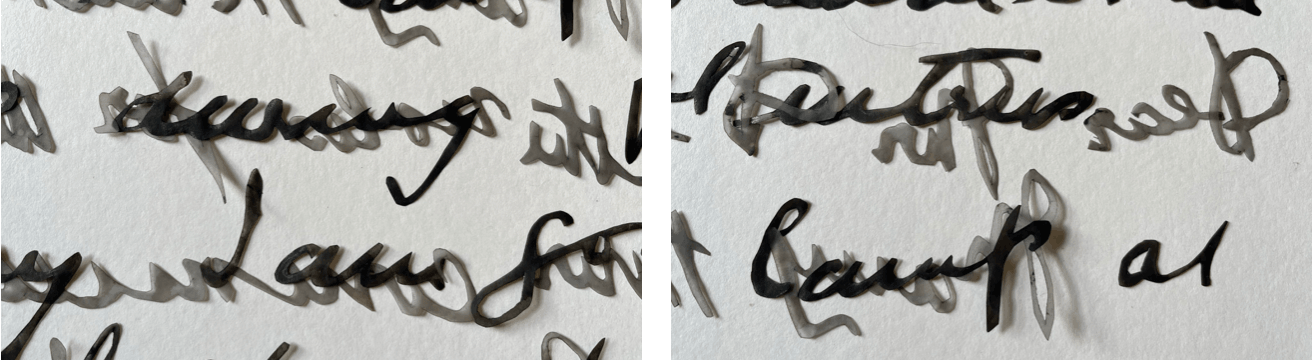
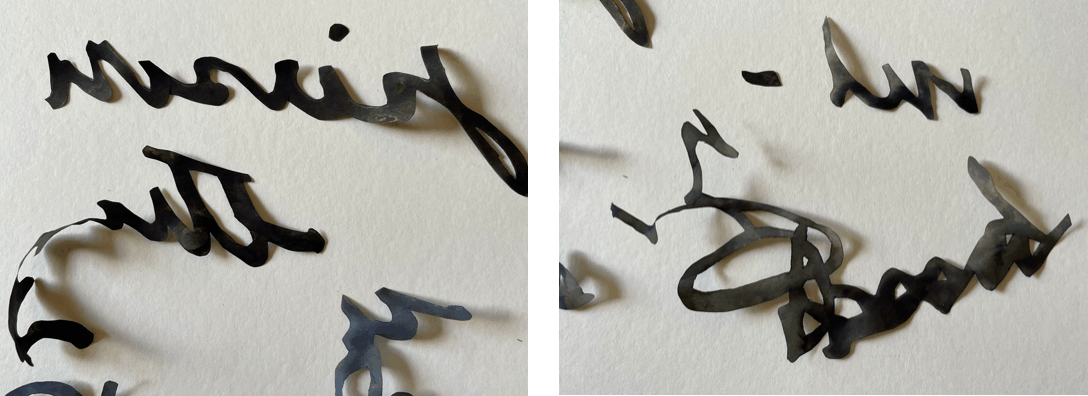
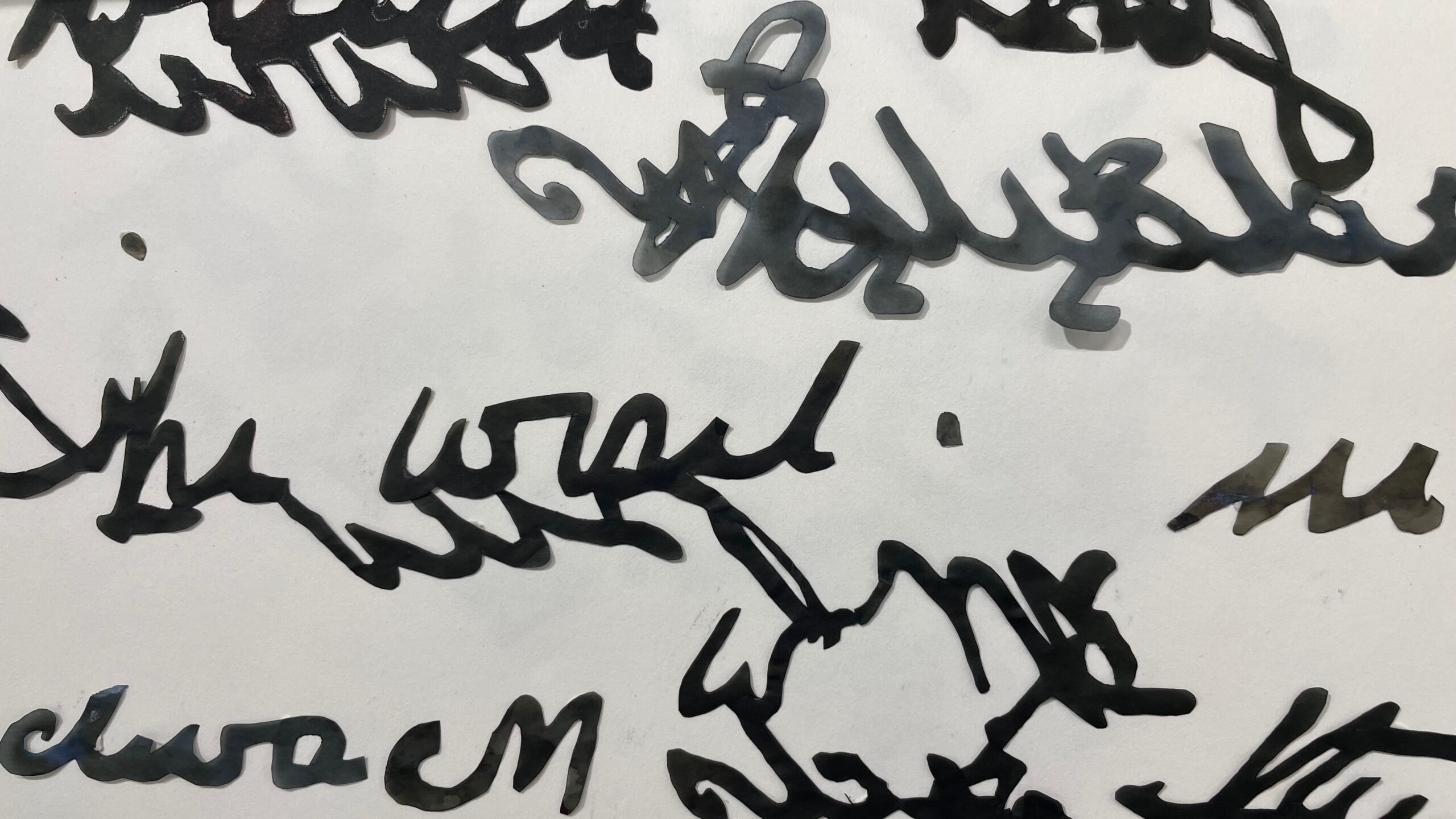
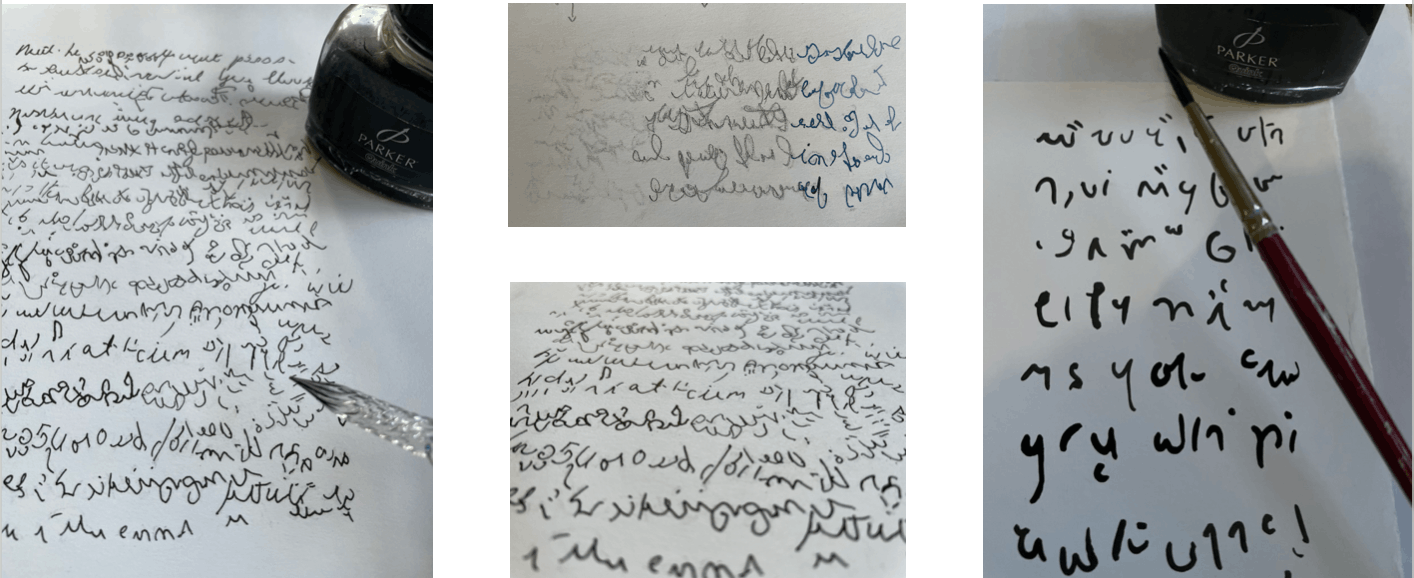
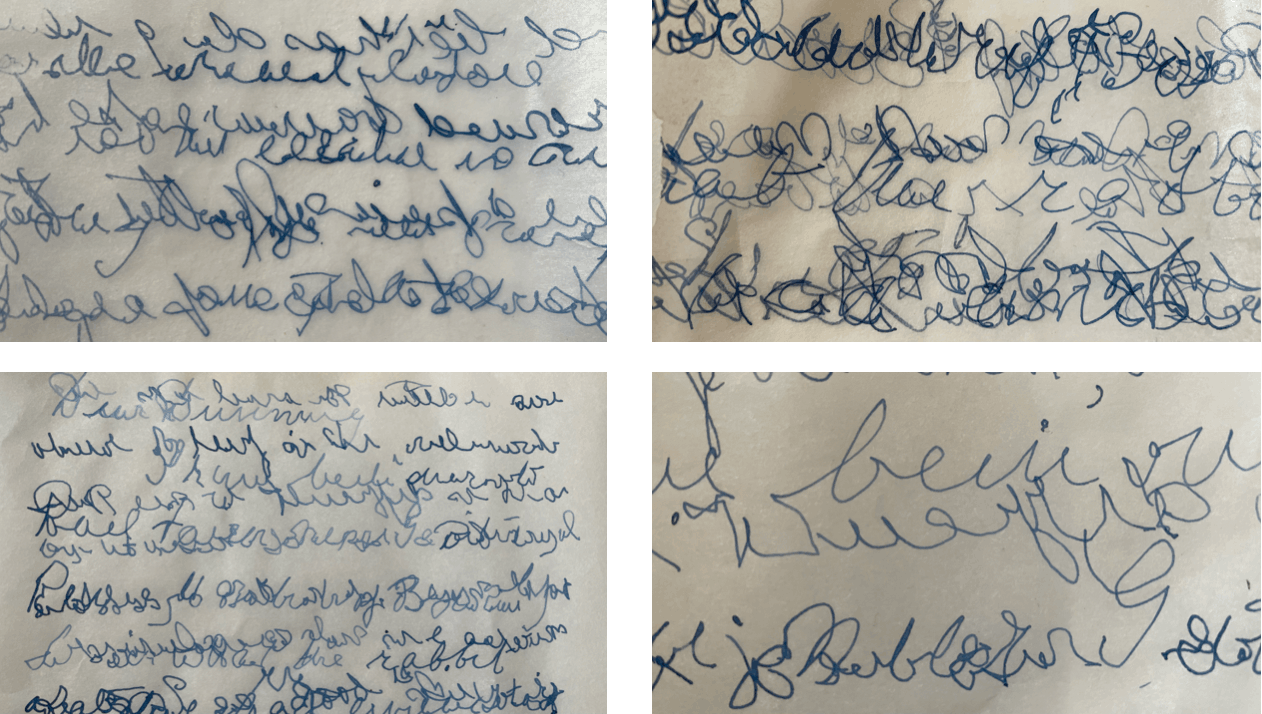
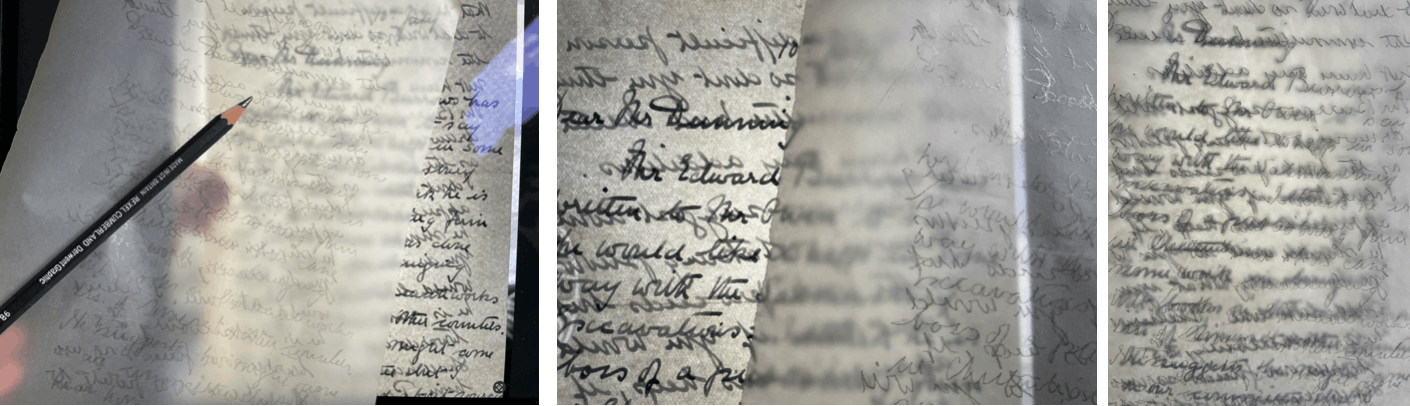
The making of “notes on the finds” – sketchbook details and works in progress. 2026
During this exhibition, we also celebrate this site through an afternoon talk Salmonsbury – Corinium Museum; and a visit from Sally Pointer, award-winning experimental archaeologist and heritage educator, who will be leading a workshop ‘An Introduction to Prehistoric Textiles’ – available to book here – coriniummuseum.org/an-introduction-to-prehistoric-textiles
On Tuesday 29 Sept we will be talking about this project at Walking the Land‘s Last Tuesday Café (online event). Let me know if you are interested, or sign up to WtL mailing list on their website.
If you are planning on visiting the exhibition, I am hoping to be there on 17 and 24 September, so feel free to message me and we can try and meet up.
Subscribe to be added to my mailing list for occasional updates on exhibitions, events, new artwork and workshops.
I will treat your privacy and personal data with respect . Your details will only be used to send occasional newsletters if you click the link in the confirmation email and you can unsubscribe at any time by clicking on the link at the bottom of the newsletter or sending me an email at ruth@ruthbroadbent.com
Related Posts
Deep Encounters: LogBook
Drawn to a glimmer of water hidden in a…
Walking and Drawing: A Wobbly Line
After walking and drawing tracks and…

Drawing Water, from puddles to rivers and sea
Spending time by or in water seeps into…