Deep Encounters: LogBook
A year with a log: a multifaceted mapping of a small piece of land
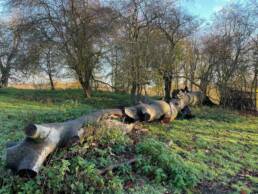
Drawn to a glimmer of water hidden in a small hollow of a log, I walked closer and looked inside. I’ve walked past this log many times, in a small hilltop woodland of the castle park grounds, but have never stopped to sit on it. I usually sit on a large tree stump at the bottom of the hill, nearer to the river and moat. Something pulled me closer this time, and I wanted to return. I took my lunch and sat on it, walked around it, peered into gaps, noted lichen marks, fungi and the aptly placed score lines around the centre of it.
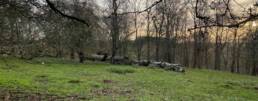
I mapped the rainwater puddle sheltered in a hollowed out section near the top of the trunk and will continue recording rainfall over the year: a miniature puddle world. Layered together, over time, their edges might have resonances with the tree rings at the base (a whole other world to discover). This patch of woodland is open enough to let in sun, rain and moonlight; their trace marks becoming part of the log. The cut-off branches add undulations to the long line of the trunk. With time, I’ll no doubt find sounds and movement in its solid stillness as new life grows on and from it. Walking slowly beside it, left foot heel touching right foot toe, the log (including tree stump and visible root base) is 84 lengths of my foot long, 6 footlengths high (highest part from ground), 4 wide at top and 14 wide at base. It has a metal id tag near its base, 00622.
‘Deep Encounters is a multifaceted mapping of a small piece of land involving artists working in different areas/location.
At its centre is the perception of a space in a much more intricate way than normal.’
(Janette Kerr, 2025)
Read more about the project and artists here. This is a Walking the Land project initiated by Janette Kerr. Participating artists: Zoë Ashbrook , Ruth Broadbent, Alison Berrett, Sara Dudman, Tamsin Grainger, Melinda Hunt, Richard Keating, Janette Kerr, Rachel McDonnell, Valerie Coffin Price, Amanda Steer, Sally Stenton, Molly Wagner.
I’ll be spending a year with this log, responding creatively to what I encounter and will add updates here as the project progresses.
LogBook (extracts)
Autumn 2026
“Hello old friend”
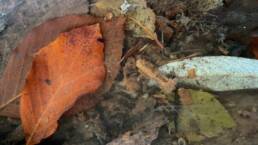
At last I am back. This time with an autumnal crunching underfoot when walking across the field from the lane towards the woodland on top of the hill. My foot hurts and I find myself seeking out small grassy hummocks so only my heel touches the ground, ball of foot suspended in air. I wondered what changes would lie ahead, and even if the log would still be there. It is.
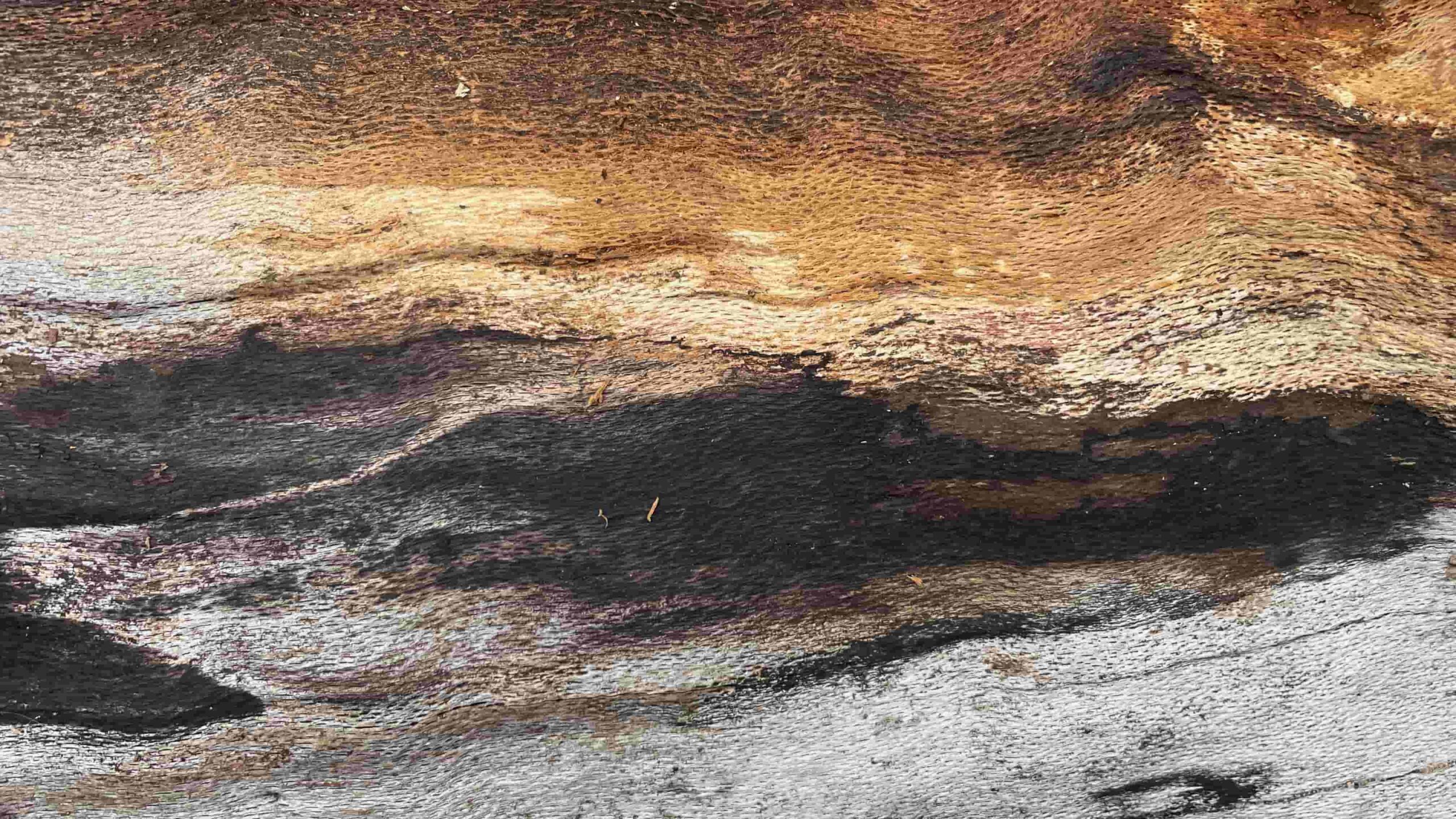
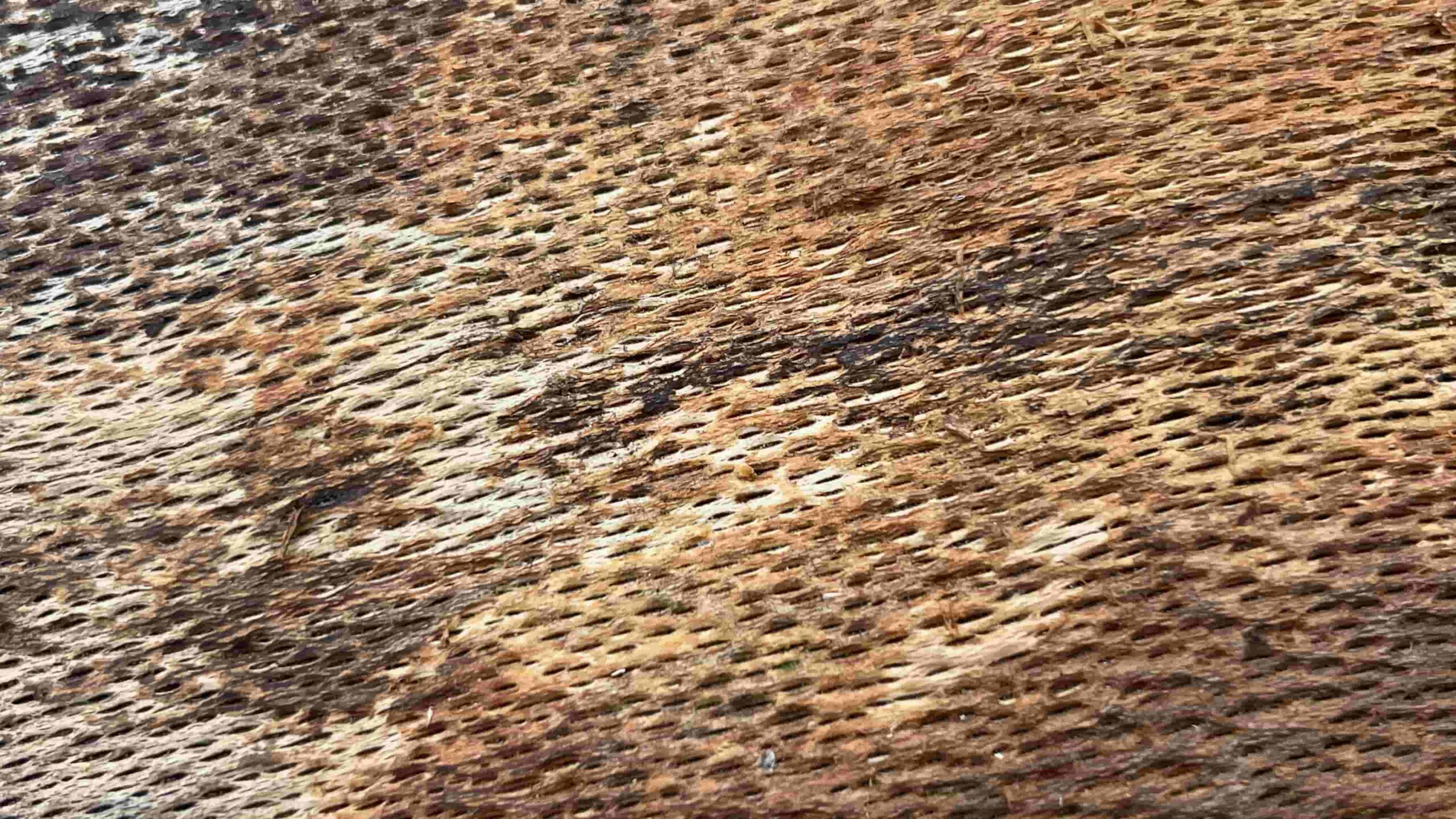
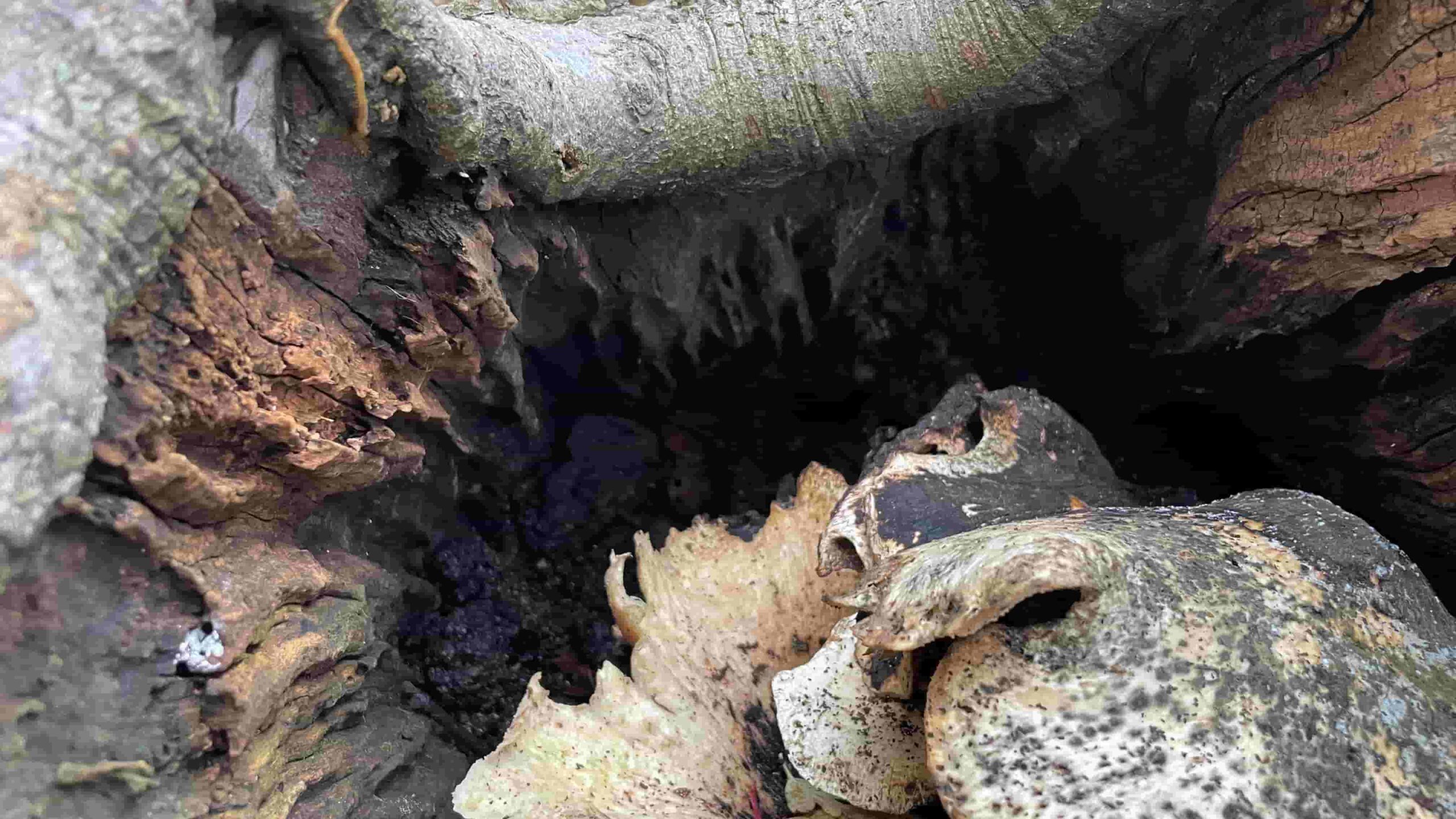
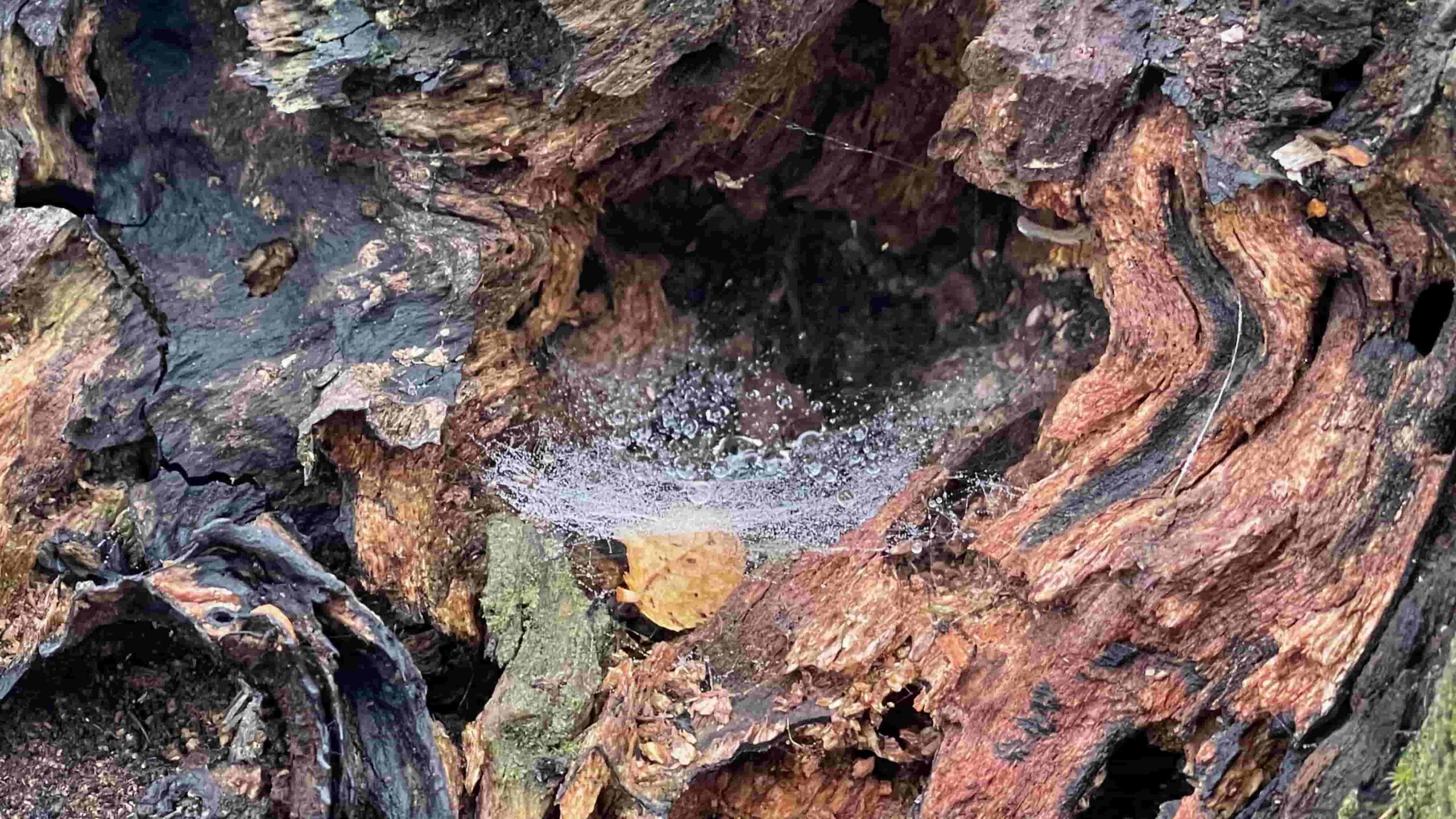
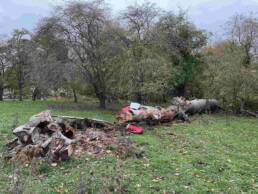
A little mound of cut logs is at the tip of it next to where the puddle pool was. Even more bark has peeled. A soft foamy woven mesh-like surface is visible, the underneath of the bark revealed. There are greys, blacks, browns and white. I wonder what causes each of these areas to be the colour they are. Is it where the rainwater pools more? Don’t think so as some dark bits near top where rain would quickly run down / downhill / downstream. I took a pencil rubbing but need to return when it’s drier and not so soon after rain.
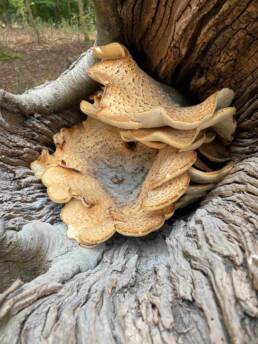
Dryads saddle. Various fungi, including splitgill. Red hawthorn berries. Jackdaws and light aircraft overhead, traffic sounds ahead, downhill from here. Nearby church bells chime at 4pm. Blue tits, great tit, long tailed tit, chaffinch, crow, rook, wren, robin, pheasant, green woodpecker. A leaf falls from a neighbouring tree. Squirrel climbs nearby hedgerow. Flys buzz around. Traces of animal footprints, probably the longhorn cattle or sheep that are sometimes here.
Lines, wavy lines, scored lines. Seven dog walkers, one conversation about the log. Slight smell of burning, maybe soil, earthy. I took a video of a light orange soil centipede coming out of hole near dryads saddle fungus (click on image above to play video).
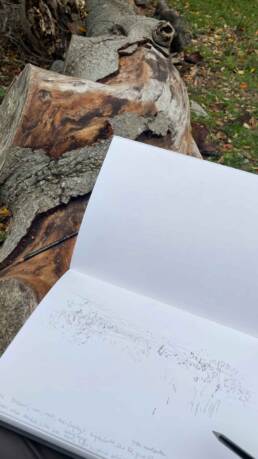
I’m enjoying sitting on the log and listening, looking, drawing. there is a comfortable patch at the right height for me to sit, at the end next to where the puddle-pool was.
I ran out of time to draw the black lines at the end of the log. They remind me of my puddle world mappings.
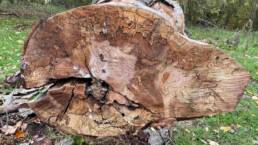
It is approximately 1,500 steps to walk to log and back from the top of the lane, which with the problems in my feet at the moment is at the limits of what I can manage. Whereas previously I incorporated a longer walk into my visits, I now focus on just on this area, and spend most of my time sitting on the log itself, using it as a welcome support for myself and my drawing materials.
Summer 2026
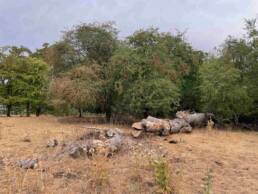
The ground is so dry after a summer of sun without rain. Sound of dry ground crunching underfoot as I approach trunk. Bark has peeled off more in places. I collected thistle fluff from site of puddle. Huge Dryads Saddle in a nook. Small unidentified animal droppings on top of log. Immensity of the size of the log trunk came up on a visit there with friends. Also is it ash not beech? I’ll try to find out. Undergrowth of nettles has gone (from heat?). Top end smaller sections next to where puddle section was taken out are now more scattered.
I wonder what the effects of such heat this summer will have on the woodland in coming months.
A couple of quotes that I’ve revisited recently in the light of this project:
“… I used my eyes as if they were a fingertip exploring the surfaces of plants, moving over contours one by one… My hand followed wherever my eyes went, imagining that I was tracing a shadow of the leaf as it would fall directly down onto the paper.” (Claude Heath interviewed in Maslen & Southern, Drawing Projects, 2011, Black Dog Publishing, pp90-95).
“You must begin by making small things as that starts [the] cycle going. Doing begins things and it continues. It is always that way. As one piece leads into the next… doing perpetuates doing, and thinking” (Eva Hesse, undated notebook entry).
And a particularly apt quote that echoes my own approach, from Marlene, who is also taking part in this deep encounters project:
“Underlying all my work as an environmental artist has been an interest in place—not as a geographical location but as a process that involves layers of memory, multiple narratives, ecology, language, politics, emotions, and both scientific and vernacular knowledge.” Marlene Creates
These quotes resonate in different ways on the processes of making work, ways of working in a place and all its many layers. So much to still discover from this felled tree log in the woods.
February – March 2026
On each visit I notice the changes through weather, lighting and seasons. From the rain lines on the beech trunk, replaced by sunlight on other visits, I gather observations on the ways the elements interact with the surface of the log. I watch the slow travel of a tiny insect around the edges of the log rainwater puddle.
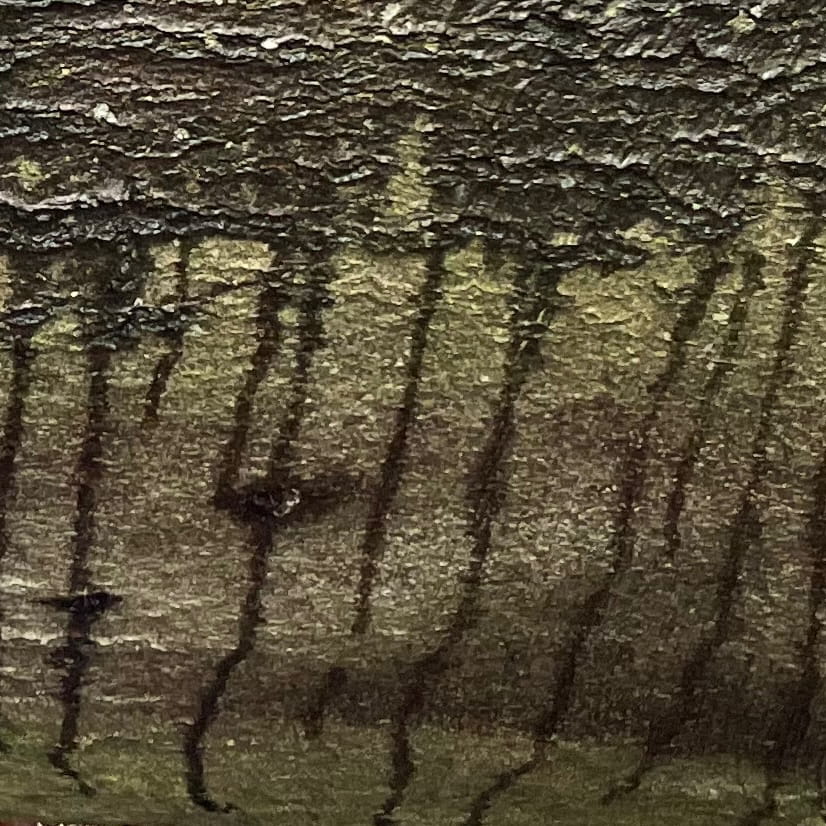
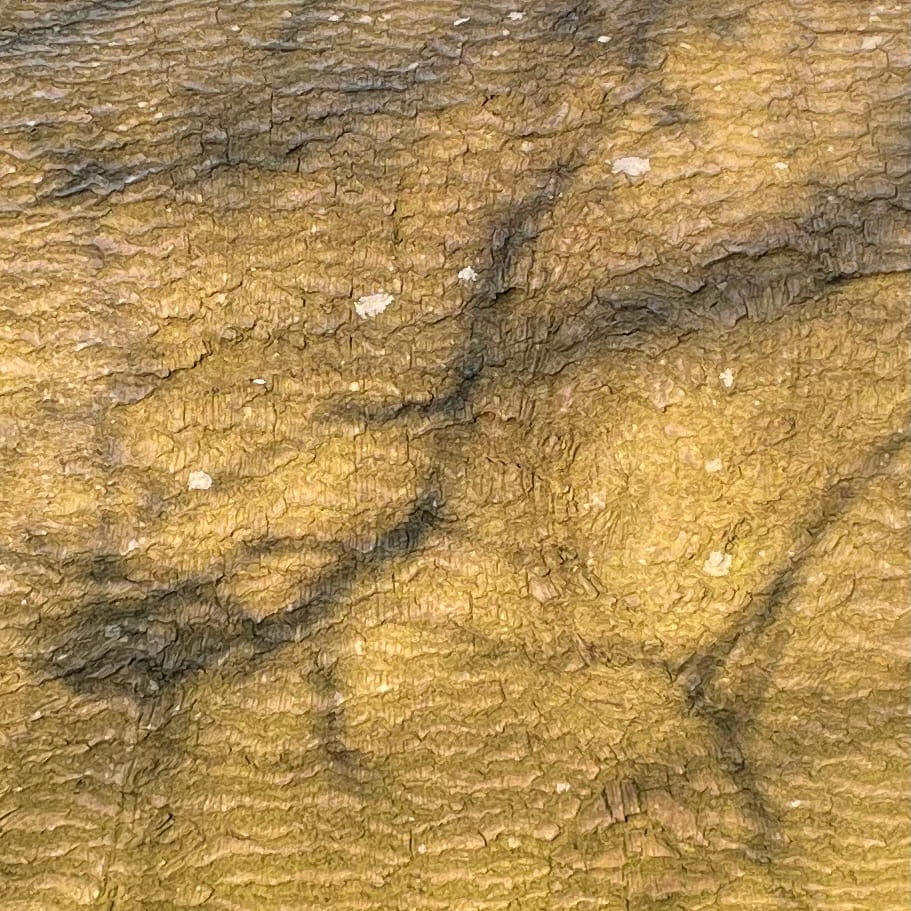
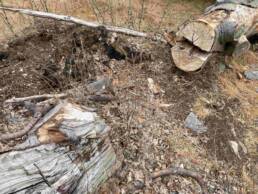
The biggest change has been the disappearance of the puddle! In March, I visited with my roll of paper and pen to take another measurement mapping of the edge of the waterline. This section has been completely cut out. I have no idea why and am now wondering if the whole log might at some point disappear and my deep encounter will be with a patch of land on which this log once lay.
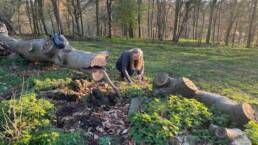
There were wood shavings on the ground from where the trunk was cut so I collected a handful in memory of this small puddle world. I wonder where the insects will now go for their water supply. I had noticed signs of an animal in that area too and wonder if it will now return to this spot.
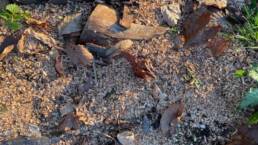
Where the rainwater pool has been cut out are new tree rings to study, their markings reminding me of my previous puddle world drawings, as well as script-like handwritten marks.
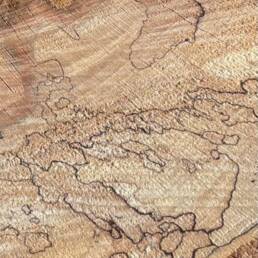
New growth has sprung up with a variety of lichen and fungi. With the rainwater pool that first drew me to this log now gone, I wonder what my focus will shift too. The site is still rich in creative inspiration. Looking back at notes made over the last two months, a couple of quotes by Robert Moor (in Dendrochronology, Emergence Magazine, November 14, 2024) caught my eye and seem particularly apt for this moment:
“ Looking around, I tried to take it all in with an artist’s eye. How would I paint such a scene? How would I describe it in words? … The closer one looked at any one thing, the more intricate it became, down to an infinite degree. And there were a seemingly infinite number of these infinitely complex things, in infinitely complex arrangements with one another… this chaotic arrangement of forms—a density and diversity of shapes, sizes, and shades… belied a deeper order. I was looking not at a site of decay, but of growth—the luxuriant, slow accumulation of something at once resilient and frighteningly fragile.” (p6).
Moor wonders “What would our culture look like… if in addition to marking time through calendars, we marked it through the growth and decay of trees?” (p7).
I visualise Moor’s description of dendrochronology in drawings, line and wash, intersecting and overlapping. I’ve so far been making sketches from the puddle and the main trunk of the tree but there is also the base of the tree, still in the ground, its diameter and tree rings, and now the new trunk ends where the rainwater pool was, records of time. There is more that I can learn from the science of dendrochronology by looking more closely at its tree rings and the data it might hold. I will be visiting again soon and have no idea what I will find there. Blossom is out, insects are buzzing, migratory birds are beginning to return. Will the log even still be there? I look forward to seeing what the spring will bring.
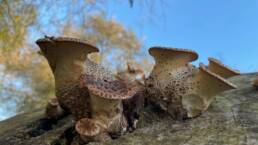
January 2026
I have a collection of books on trees and nature and am starting to look back through some of them. In thinking about ‘deep mapping’ I want to find out more about the life within and from a log. Isabella Tree opens Wilding (Picador, 2018: p13) with a quote by Oliver Rackham from Woodlands, 2006: A “single 400-year-old-oak… [is] a whole ecosystem of such creatures for which ten thousand 200-year-old oaks are no use at all.” Tree writes of how, as they learnt more about the ways that “Dead and dying trees are part of nature’s recycling process, stimulating biodiversity”, they began to value them and decided to let Nature lead the way: “The oak took on a beauty all its own; a kind of sculptural, metaphysical grandeur… another universe sprang to life.”(p47).
I wonder how old this beech tree log in the woods is and how far its roots might still extend? When was it felled? What are its stories, past and present? What impact has this log in the woods had on its immediate environment? What will its impact be as time passes? Lots to discover in the coming months.
The rainwater pool / puddle continues to fascinate me, especially with some heavy rainfall recently. Over the last few months, I’ve been informally exchanging quotes with Valerie Coffin Price (Ffin), that we think might be of interest to each other – a lot of them are about water, from rivers to oceans. Serendipitously at the start of this month Ffin sent me the perfect quote for observing the rainwater collecting in a hollow of the trunk, from Antoni van Leeuwenhoek, 17thC ‘father of microbiology’: “When I feel disposed to look at all manner of little animals, I just take … the water out of stagnant shallow ditches: and in this I discover marvellous creatures.”
Having now made some tracings of the rainwater levels, I’ve been making some test pieces of how these might be presented – lots of possibilities and different media that I might use. Shown here are details from a couple of ink sketches, thinking through how to layer them together whilst also being able to tell each one apart.
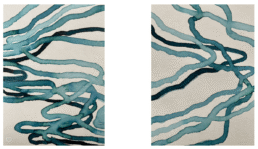
As I get to know this beech log, I can’t help wondering what it was like when it was a tree. Did anyone climb it, like The Beanstalk on Hampstead Heath Cosmo Sheldrake describes when talking about how he records sounds of nature for his music? (in This Natural Life: Cosmo Sheldrake 14 Aug 2025, BBC Radio 4: 20.31 mins in)
He describes beech trees as octopus-like and great for climbing with their branches growing out then back into themselves: “All sense of scale disappears when you’re up there because you can’t see the ground anymore…”. Sheldrake uses recording equipment, such as hydrophones and geophones, to listen more deeply to the watery and earthy sounds. So far I’m only at surface level of what I can see, feel and hear.
How will this trunk, lying on its side, whether felled or through natural decay, nourish future generations of trees as well as other life? As I draw in my sketchbook, I’m thinking through drawing how this project might develop and what I might find on my next visit to the log. Using a side profile of the log, I’ve been drawing repetitive contour-like ‘tree ring’ lines, each one led by the one before, radiating outwards.
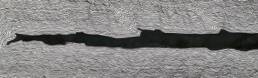
Whilst drawing in ink with my favourite glass dip pen, I listened to Suzanne Simard, Finding the Mother Tree (interviewed in Emergence Magazine, October 26, 2022). She speaks of the “wood-wide web” and her theory of how Mother Trees recognise their kin, nourishing their future growth. She talks of how trees can help to heal our separation from the living world. I looked at the outer ‘contour’ lines on each of my drawings and began to see the potential for a new forest growing from the ‘mother tree’, in this case the log, moving from lying horizontally on the ground, to upright.
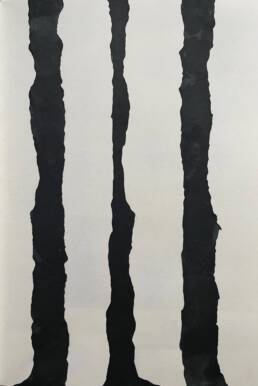
This month is unexpectedly full of quotes. I’ve added a few here as the process of rainy days in the studio drawing in my sketchbook has included immersing myself in podcasts and reading about trees. Over the coming months, I’ll have time to look closer and respond both on site and back in the studio. Ultimately this project is about spending time with the log, in the woods and responding to whatever comes up. I enjoy the research side to whatever I am working on, and a dialogue between making and discovery run alongside each other in varying degrees. The process generates ideas for meaning and making.
Within the context of selecting a site for this project, Deep Encounters, I thought I had chosen a small area to focus on but the more I look, the more I see. I started with the rainwater puddle as that is what drew me to this log in the first place and then started mapping the log. Not having an image from the air, and my gps apps having failed to record me walking around it, I’m using a side profile of the log (with the base out of sight, obscured by foliage) as a starting point for mapping the log and its environs.
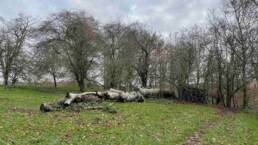
December 2025
In trying to decide on which ‘small piece of land’ to choose for this project, this log was forefront in my mind. I thought about Greystones / Salmonsbury Camp as it would link to another project that I am working on but the site is larger. I wanted to be somewhere quiet without lots of people or traffic noise so I decided against an old oak tree (which has featured in a previous artwork, Abandoned Walks: Between Two Oaks, walking a line with Kel Portman), or the river, both in local parks. I also considered focusing on a puddle but that is more suited to other areas of my work (although a puddle is featuring in this project in another way).
I can’t fully articulate why I felt so drawn to this particular log; maybe it was the rainwater puddle within it, but it felt like it would work with my ways of making artwork as well as having the potential for trying out new ideas.* It seemed like a good starting point for sitting, looking, listening, watching, hearing, observing, slowing down and quiet contemplation, experimenting with ideas and responses. I find logs are great places to sit quietly, or catch up on work, plan ideas for teaching, catch up with friends… In 2023, Tamsin Grainger and I created a project, Conversations from a Log, an exchange of letters that became words, both spoken and written, walks and maps.
Although I have some initial ideas, I have no idea where it will end up. I’ll spend time with the log, finding miniature worlds, life and changes within it over the course of a year. Logs feel quite playful, especially in their association with childhood, climbing trees and clambering over them. Play and experimentation is my starting point.
Being part of a walking artists project, and with it being quite a long log, I decided to walk it and use the length of my feet as a measuring guide: 84 long x 4 wide (top end) x 14 wide (bottom end) x 6 high (is there a technical word for the length of my foot as a measurement – footlength?). I might also measure it in number of paces/strides for a smaller scale measurement.
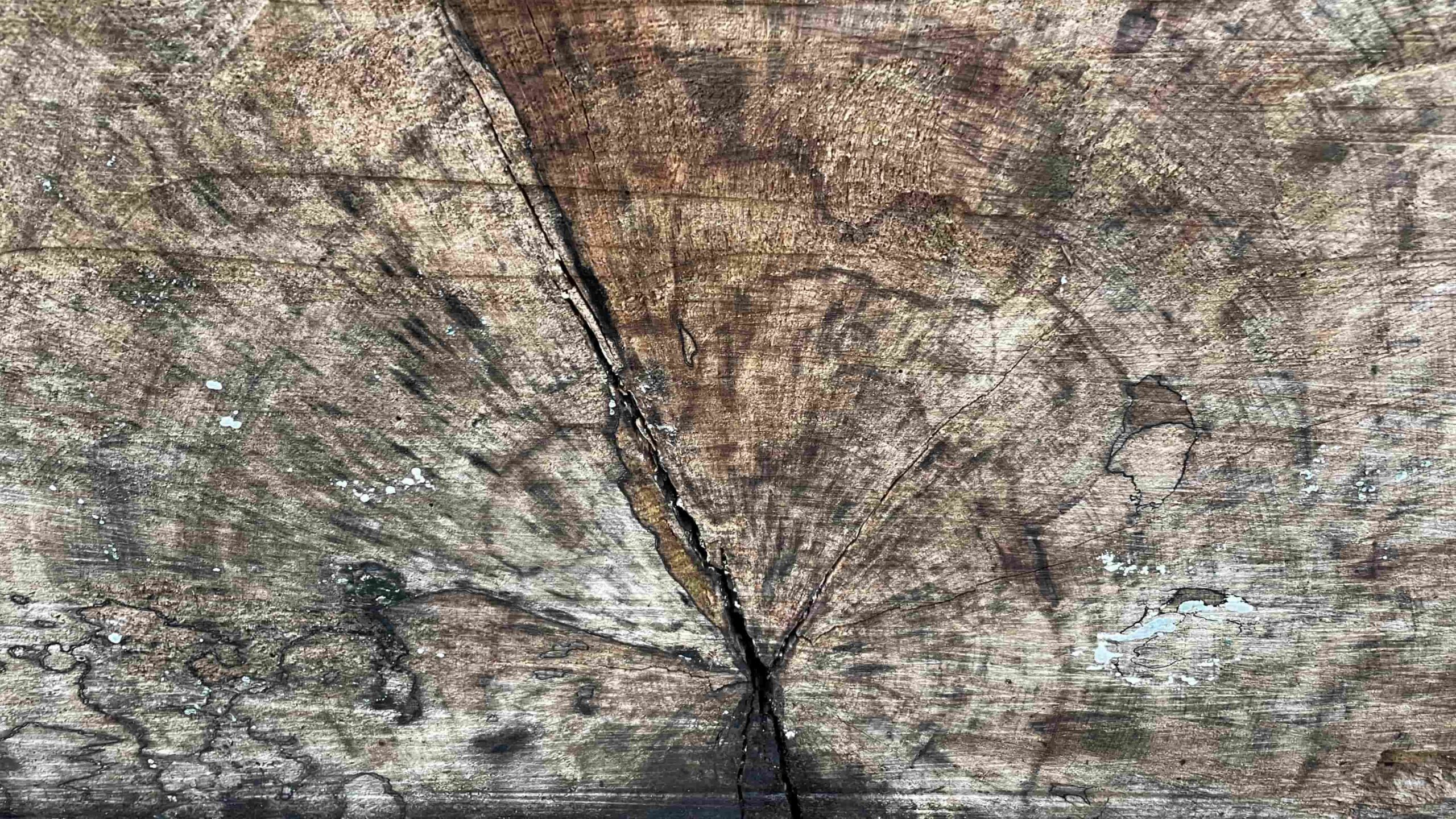
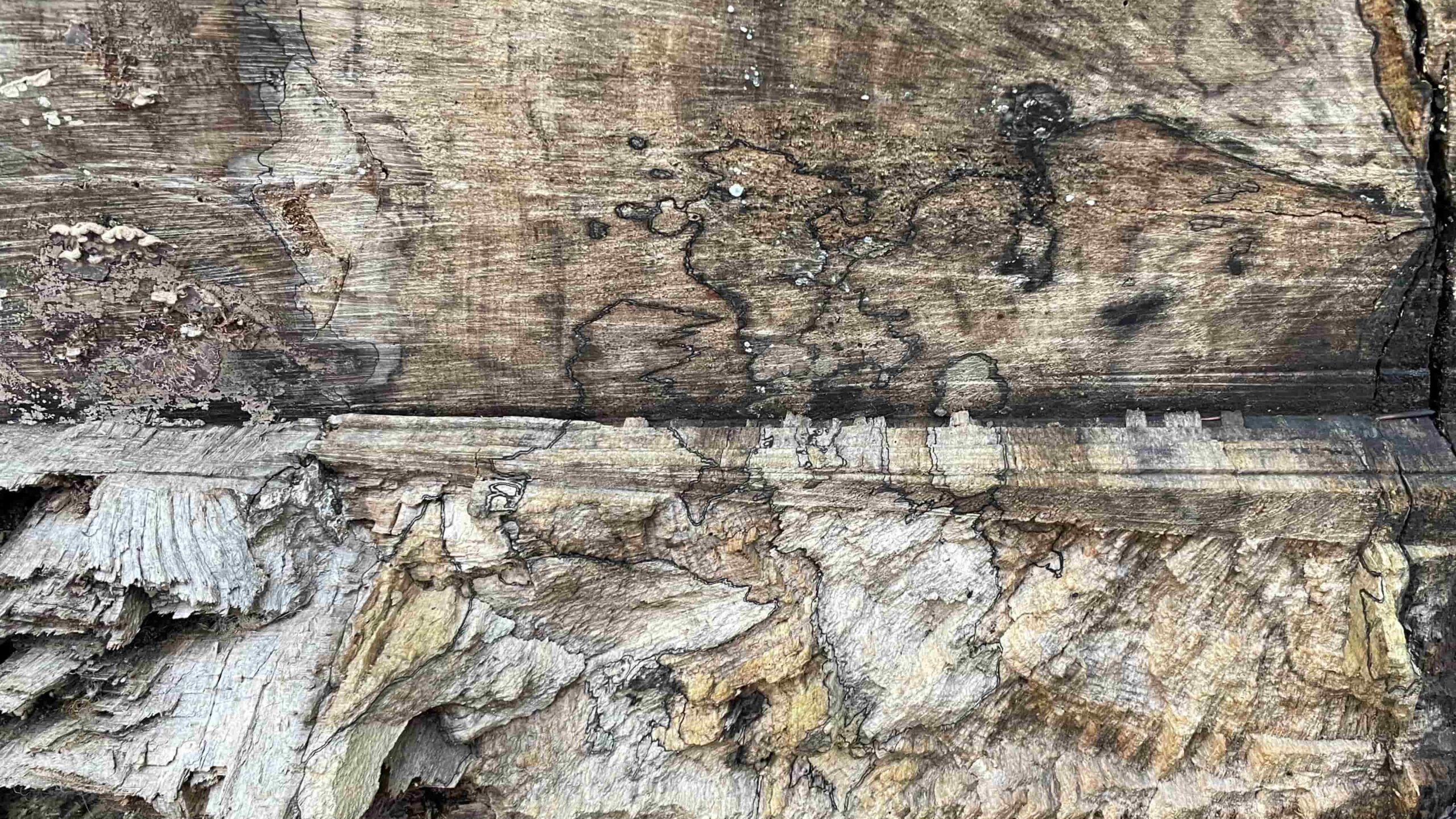
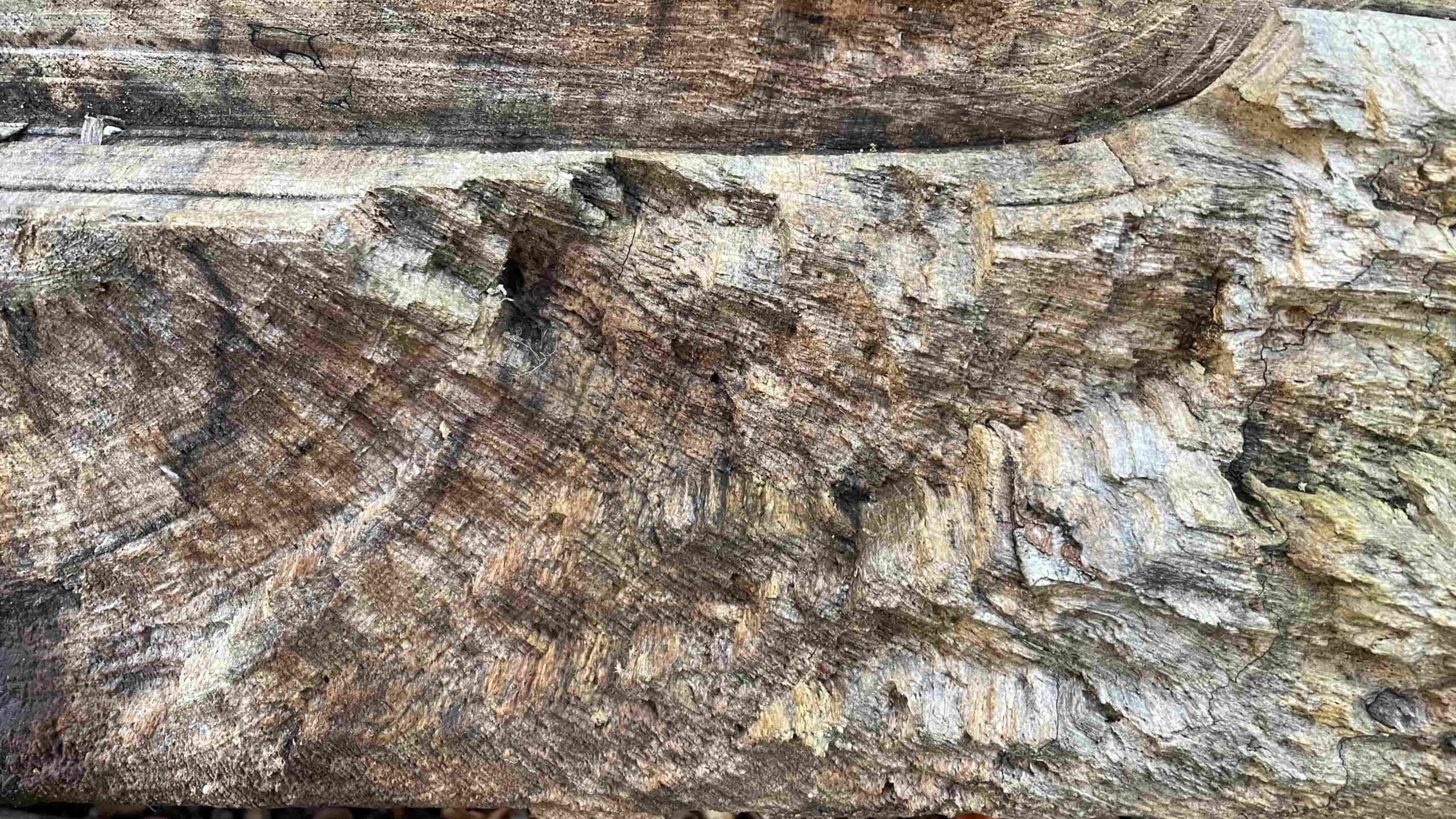
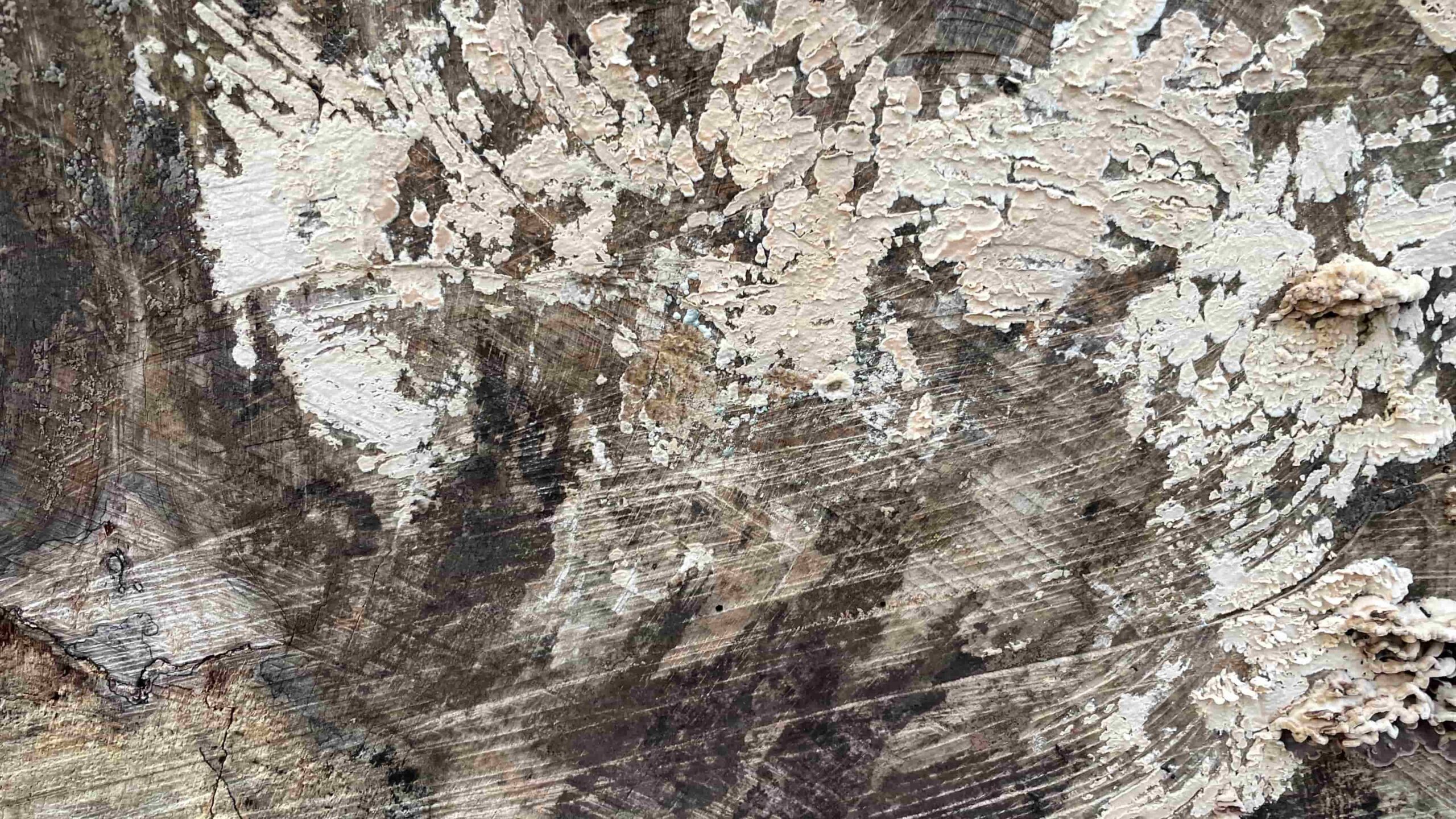
I’ve been wondering at what point does a fallen or felled tree become a log? Is this a log or a tree (trunk)? Its branches and top canopy have been cut off so it is just the trunk (not a fallen branch), with its base (stump) still in the ground. I’m assuming that the marks of it having been felled and no longer being an upright living tree, alongside being the trunk of the tree, is what makes it a log. This led me to contemplating the multiple meanings and their connections of the words log, logging, logged, logger, so I decided to call these diary extracts a LogBook.
Eating my picnic lunch on one visit, I noticed that the centre has lightly scored lines over its girth, an apt marker. There are lichens forming patterns of dots along the trunk, a variety of fungi, clumps of nettles, and a nearby den made from branches with a small solitary log inside it to sit on. My nature app identified the lines of the bark as an adder! It looks like a beech tree, from clues around it and from the way the rain marks the trunk. In the past I’ve made drawings of rain marks on beech trees, Rain-lines (beech), so am interested in spending more time observing how water and light land on it and move around it. There are other logs scattered nearby; this one has an id tag (00622) near its base and the initials TJ scored into it near the centre.
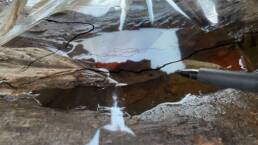
I’m making tracings of the outline edges of the puddle nestled in a hollow within the trunk, mapping the varying rainwater levels on each visit. I want to find an easier way to do this but it’s working for now. Maybe the edgelines of the puddle will find some resonances with the tree rings at the base, in shape and form, as well as being a temporal measurement, although the puddle ‘rings’, unlike the tree rings, will expand, contract, refresh, renew, and overlap. The puddle is a miniature world in itself, with its reflections, leaves at its base, and yet to be discovered life within it.
The watery elements to this log, from puddles and droplets of rain to rain-marks on the trunk are also part of the log and of this project. Visiting after heavy rain, the log looked different when wet. In winter, without leaves on the trees and hedgerow, the woodland opens up to views over surrounding countryside, so I can sit on the log and see the meander of the brook at the bottom of an adjacent field, in parts overflowing from the raised water levels. It’s a peaceful spot to be in and find my way into ‘deep mapping’; apart from occasional (dog) walkers, there are just the winter sounds of long-tailed tits and jackdaws.
* My time with this log will follow the principles of leave no trace. I will be mindful of the many ecosystems and living worlds, from plants to wildlife.
to be continued…
Subscribe to be added to my mailing list for occasional updates on exhibitions, events, new artwork and workshops.
I will treat your privacy and personal data with respect . Your details will only be used to send occasional newsletters if you click the link in the confirmation email and you can unsubscribe at any time by clicking on the link at the bottom of the newsletter or sending me an email at ruth@ruthbroadbent.com
Related Posts
Salmonsbury: a celebration of landscape and history, art and archaeology
Walking Greystones through the seasons,…
Walking and Drawing: A Wobbly Line
After walking and drawing tracks and…

Drawing Water, from puddles to rivers and sea
Spending time by or in water seeps into…